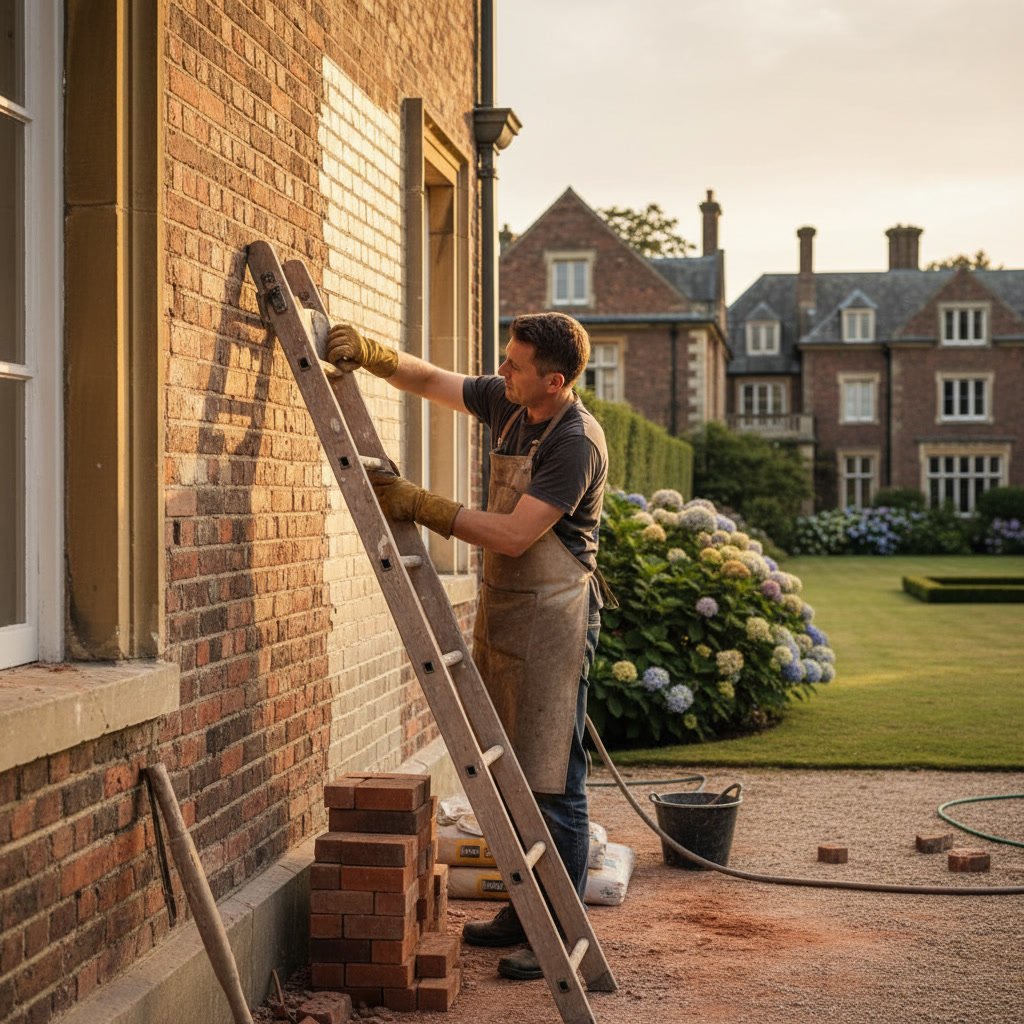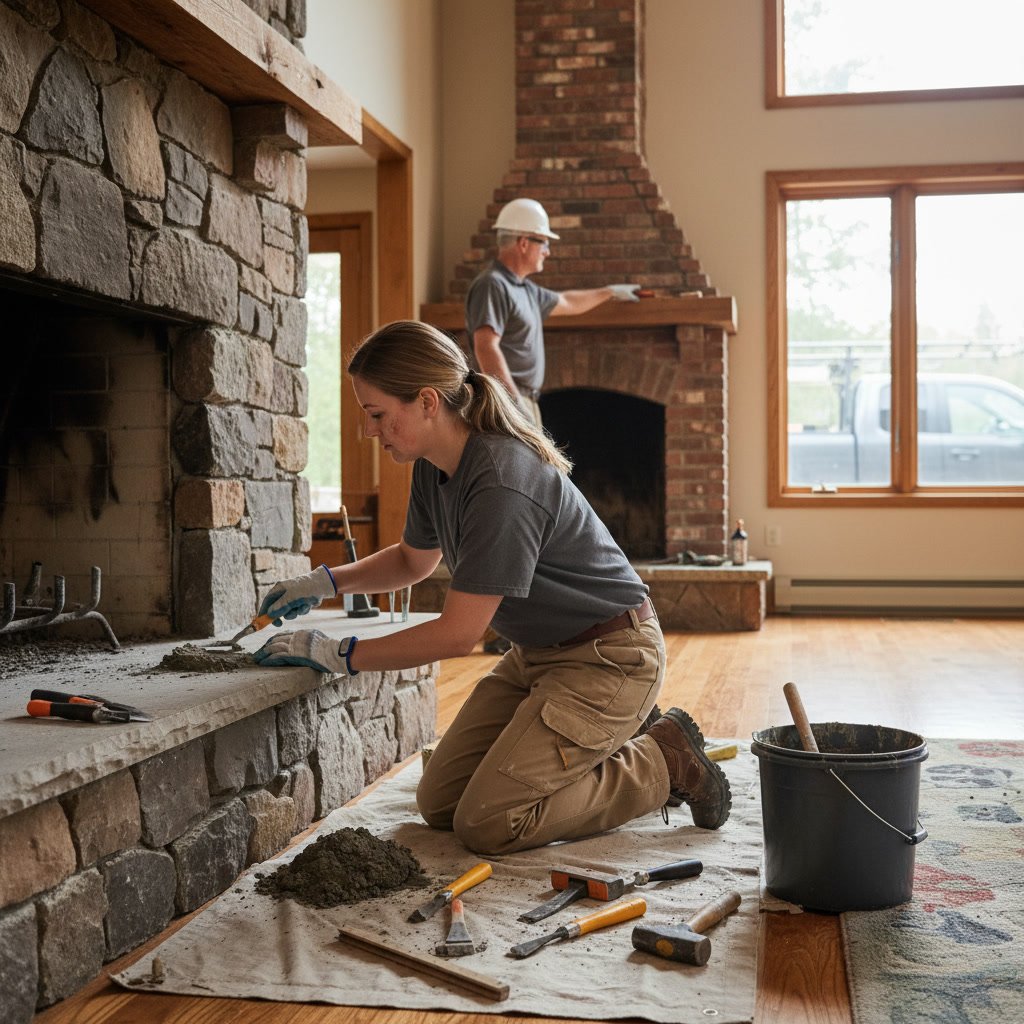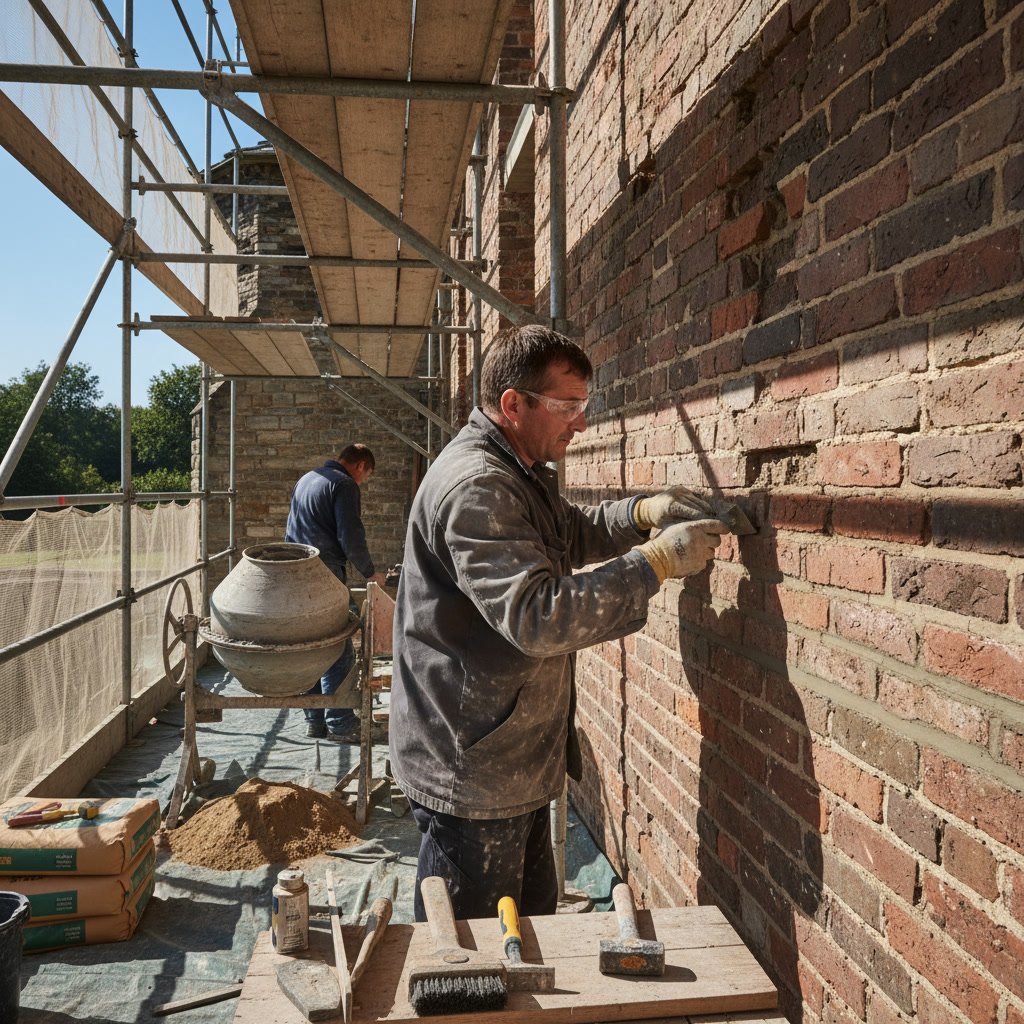
Proper fireplace maintenance between professional cleanings involves removing ash buildup weekly during burning season, checking for visible damage monthly, ensuring the damper operates smoothly, and keeping the hearth area clear of combustible materials. These simple tasks reduce fire hazards, improve heating efficiency, and extend the life of your masonry while preserving your investment between annual or biannual professional inspections.
Why Regular Care Matters for Your Hearth
The gap between professional cleanings is when most fireplace problems develop. Small cracks expand with temperature changes, ash becomes corrosive when left to accumulate, and creosote deposits harden into stubborn layers. A fireplace that burns wood just 50 times per season produces enough ash to fill a standard household bucket, and this residue pulls moisture from the air that accelerates deterioration of brick and mortar joints.
Homeowners who adopt a consistent care routine between professional visits reduce repair costs by an average of 40% over a decade. The reason is simple: catching issues early means fixing a hairline crack instead of rebuilding a firebox, or cleaning light soot instead of removing glazed creosote that requires specialized tools.
Understanding Your Fireplace System
Before you can maintain your fireplace effectively, you need to recognize its components. The firebox is the chamber where wood burns, typically lined with firebrick designed to withstand extreme heat. The damper sits above the firebox and controls airflow up the chimney. The smoke chamber funnels smoke from the firebox into the flue, and the flue itself is the vertical passage that carries combustion byproducts out of your home.
Each component requires different care. Firebrick can crack from thermal shock when cold water hits hot surfaces. Dampers rust when exposed to moisture. Mortar joints weaken from acidic creosote. Knowing what to look for in each area helps you spot trouble before it becomes dangerous or expensive.
Weekly Tasks During Burning Season
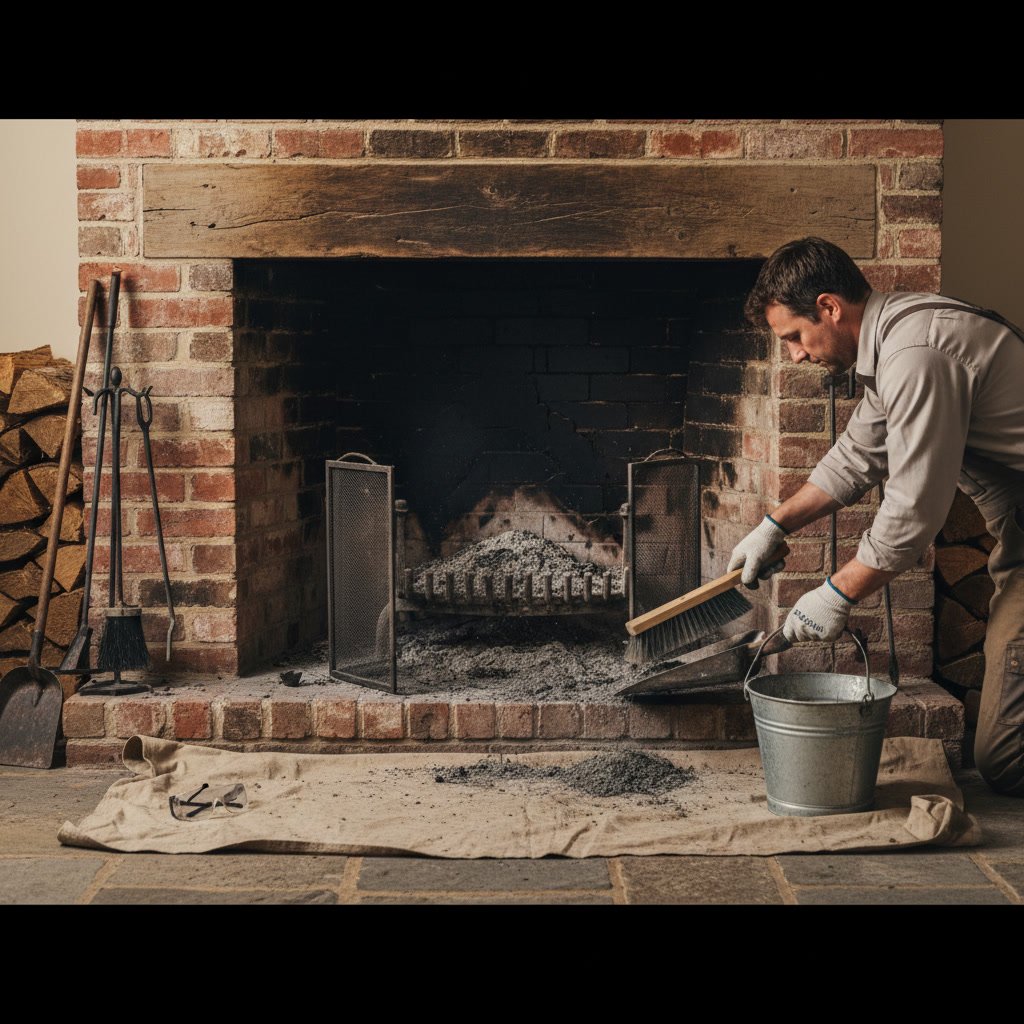
When you use your fireplace regularly, ash removal becomes the most important weekly task. Wait at least 12 hours after your last fire to ensure complete cooling. Use a metal ash bucket, never plastic or paper bags. Leave a thin layer of ash, about one inch deep, on the firebox floor. This base layer insulates the bottom and helps new fires start more easily.
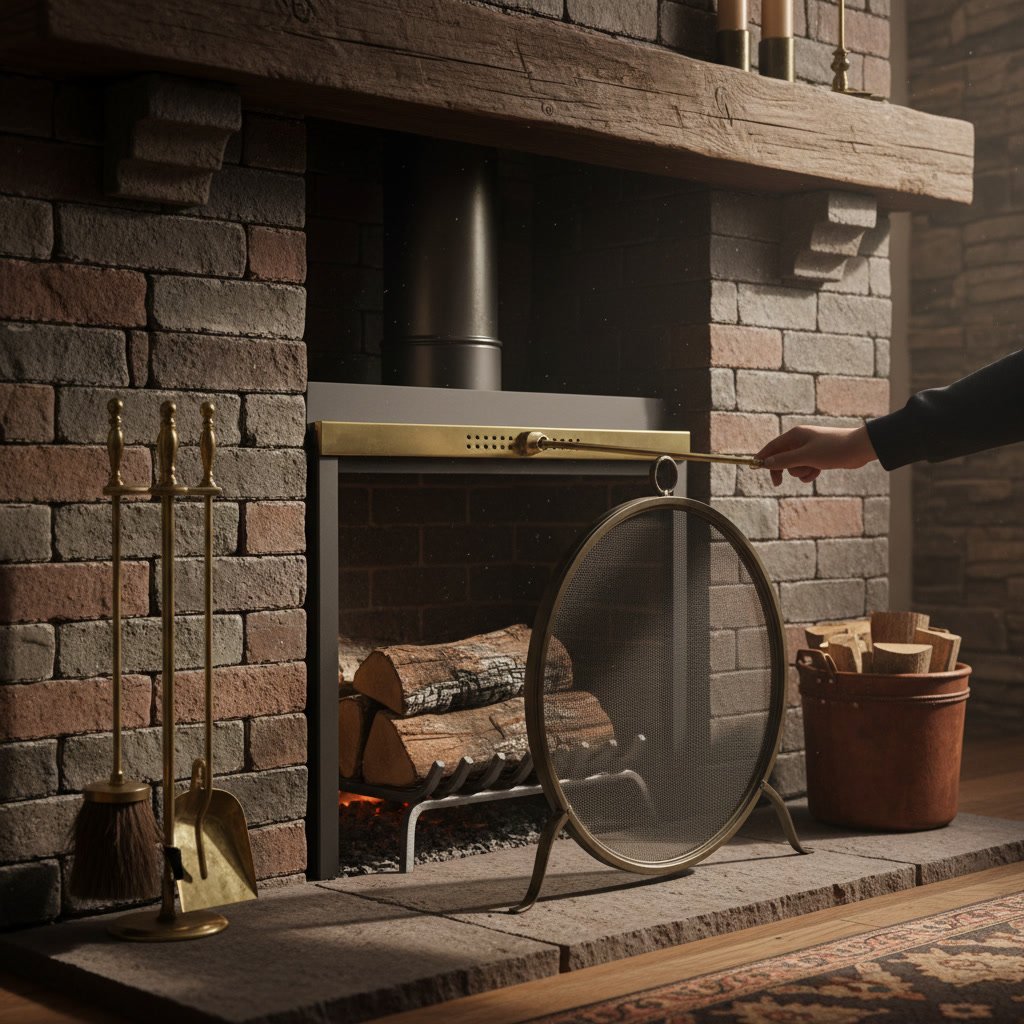
Check the damper operation each week. Open and close it fully to ensure smooth movement. A damper that sticks partially closed reduces draft and sends smoke into your living space. One that won’t close completely lets heated air escape up the chimney even when you’re not burning, which can add $20 to $40 monthly to heating bills in South Florida’s cooler months.
Inspect the hearth area for any items that have drifted too close to the opening. Newspapers, decorative items, and furniture should stay at least three feet away. This clearance zone prevents accidental ignition from sparks or radiant heat.
Monthly Visual Inspections in Palm Beach Homes
Once per month, conduct a thorough visual inspection of accessible areas. Use a flashlight to examine the firebox interior for new cracks in the firebrick or deteriorating mortar. Cracks wider than one-eighth inch need professional masonry repairs before your next burn. Smaller cracks should be monitored to see if they grow.
Look at the damper from below. Rust spots or white mineral deposits indicate moisture intrusion, often from a damaged chimney cap or crown. The high humidity in Palm Beach accelerates this type of deterioration, making early detection critical. Moisture inside a chimney system can cause spalling brick and structural damage that costs thousands to repair.
Check the exterior chimney from ground level. Use binoculars if needed to inspect the top for loose or missing bricks, damaged chimney caps, or vegetation growth. While you can’t perform repairs at height, identifying problems lets you schedule professional service before minor issues cascade.
Glass Door and Screen Care
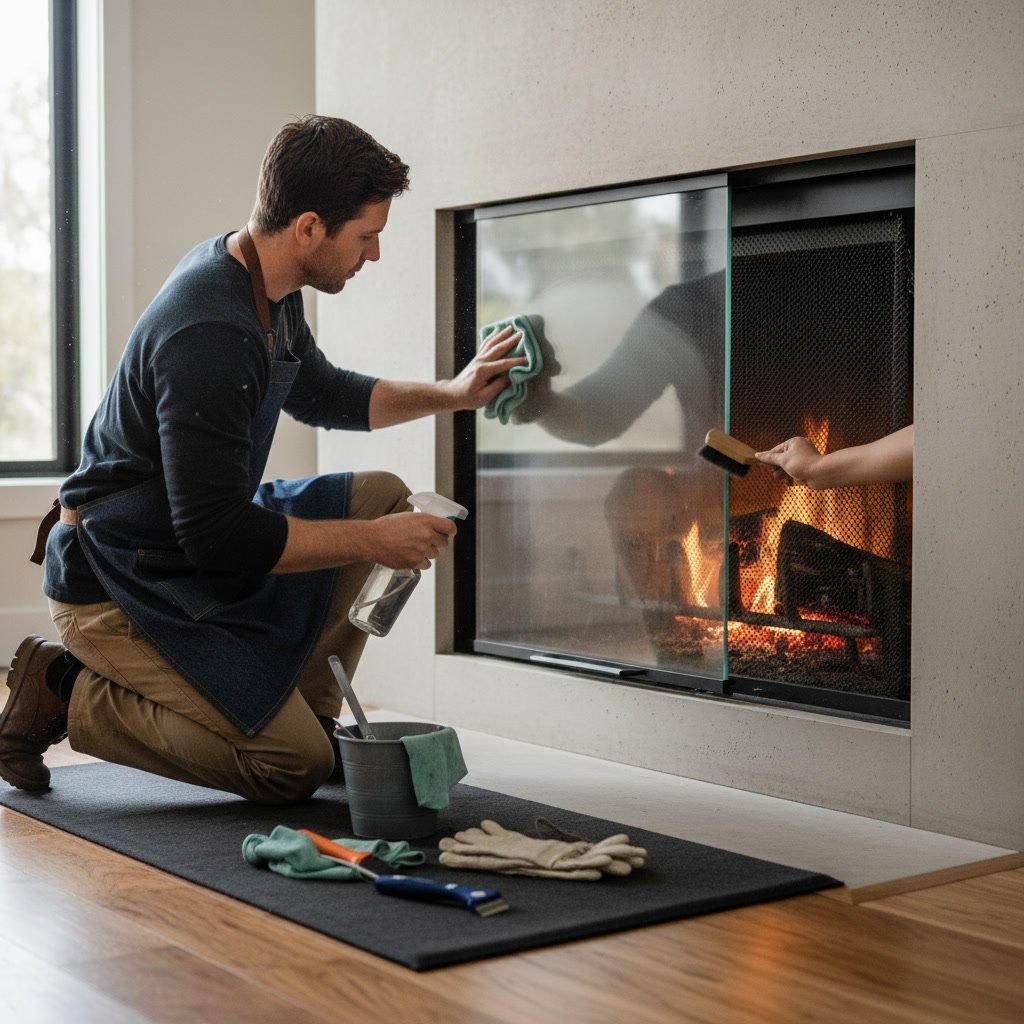
Fireplace glass doors accumulate a film of soot and creosote that blocks the view and reduces radiant heat transfer into the room. Clean the glass after every three to five burns using a specialized glass cleaner designed for fireplace use. Standard window cleaners often streak when exposed to high heat.
For stubborn deposits, make a paste from ash and damp newspaper. The fine abrasive texture of ash cuts through buildup without scratching tempered glass. Wipe in circular motions, then finish with a clean, dry cloth. This old mason’s trick works better than many commercial products.
Inspect door gaskets, the rope-like seals that create an airtight closure. Compressed or fraying gaskets let smoke leak into the room and reduce combustion efficiency. Most gaskets last three to five years with regular use and cost under $30 to replace, a simple task most homeowners can handle with adhesive designed for high-heat applications.
Managing Creosote Buildup Between Cleanings
Creosote is the dark, sticky residue that forms when wood smoke condenses on cooler chimney surfaces. It appears in three stages: first as flaky soot, then as shiny tar-like deposits, and finally as hardened glaze that’s extremely flammable. You can manage stage-one creosote between professional cleanings, but stages two and three require expert intervention.
Burn only seasoned hardwood with moisture content below 20%. Wet or green wood produces far more creosote because incomplete combustion sends more unburned particles up the flue. In South Florida’s humid climate, store firewood in a covered area with good airflow for at least six months before burning. Wood that hisses or produces excessive smoke is too wet.
Maintain hot fires rather than letting wood smolder. A fire burning at 300 to 400 degrees produces minimal creosote, while a smoky, slow-burning fire at 200 degrees coats your chimney rapidly. Use a magnetic thermometer on the stovepipe or chimney connector to monitor temperature and adjust airflow accordingly.
Recognizing When Professional Service Is Needed
Some warning signs indicate you shouldn’t wait for your scheduled cleaning. A strong, unpleasant odor from the fireplace when it’s not in use suggests creosote buildup or animal nests in the chimney. This smell intensifies during humid weather and summer months when warm, moist air enters through the chimney top.
Smoke entering the room instead of drafting up the chimney points to a blockage, damaged damper, or structural problem. Never continue using a fireplace that back-drafts. Carbon monoxide from incomplete combustion is odorless and deadly, and even minor smoke exposure irritates lungs and deposits soot throughout your home.
Pieces of brick, mortar, or tile falling into the firebox signal deterioration that needs immediate attention. These fragments often come from the smoke chamber or upper chimney areas you can’t see from below. What appears as a few small pieces may indicate extensive hidden damage.
Professional chimney and fireplace specialists have video inspection cameras, specialized brushes, and the training to identify problems invisible to homeowners. Annual inspections catch 90% of issues before they become safety hazards or require major reconstruction.
Seasonal Preparation and Off-Season Storage
At the end of burning season, typically April or May in South Florida, perform a thorough cleaning before closing the damper for summer. Remove all ash and debris, vacuum the firebox with a shop vacuum rated for fine dust, and wipe down all accessible surfaces. Trapped ash absorbs humidity and creates a corrosive environment that damages masonry during the off-season.
Leave the damper slightly open during summer months unless you have a top-sealing damper. This allows air circulation that prevents moisture accumulation and musty odors. A completely sealed chimney can trap condensation that encourages mold growth and rust.
Before your first fall fire, inspect the chimney cap from outside and look inside the firebox for any signs of animal activity. Birds, squirrels, and raccoons commonly nest in chimneys during spring and summer. A nest blocking the flue creates a dangerous situation when you light your first fire of the season.
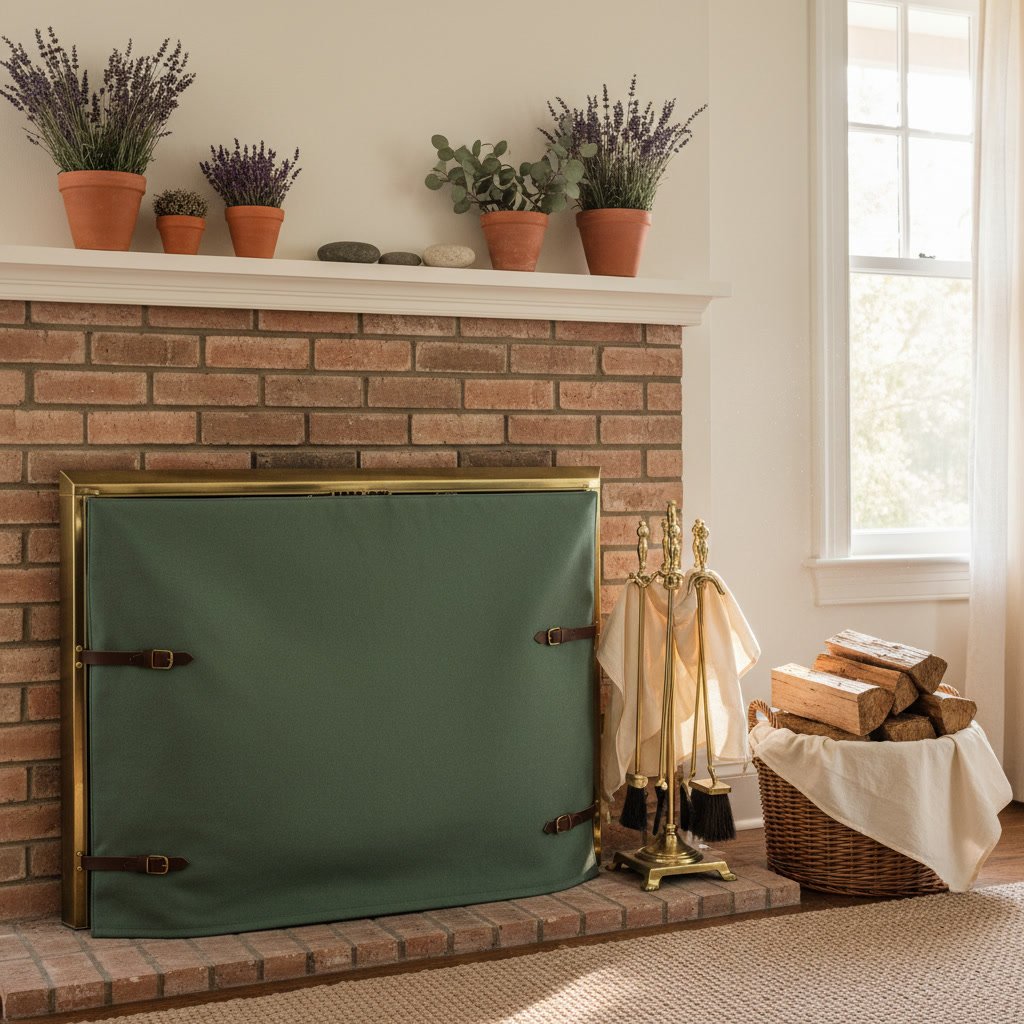
Tools and Supplies Every Homeowner Should Have
Keeping basic fireplace tools on hand makes maintenance easier and more effective. A metal ash bucket with a tight-fitting lid safely contains hot embers for 24 hours while ash cools completely. A fireplace shovel and brush set lets you remove debris without damaging firebrick. A shop vacuum with a fine dust filter captures ash without clogging or releasing particles back into the air.
Invest in a bright LED flashlight or headlamp for inspections. The interior of a firebox and damper area are dark even in daylight, and you need clear visibility to spot small cracks or rust. A small mirror on an extendable handle helps you see the damper and lower smoke chamber from below.
Keep a fire extinguisher rated for Class A fires within 10 feet of your fireplace. Even well-maintained fireplaces can occasionally send sparks onto the hearth or nearby surfaces. A small extinguisher lets you control minor flare-ups before they become house fires.
Common Mistakes That Cause Damage
Many homeowners unknowingly damage their fireplaces through well-intentioned but incorrect maintenance. Never spray water on hot firebrick. The thermal shock causes cracking that weakens the firebox structure. Always wait at least 12 hours after the last fire before any wet cleaning.
Avoid using chemical cleaners or caustic solutions on masonry. These products can penetrate porous brick and mortar, leaving residues that create noxious fumes when heated. Stick to mechanical cleaning methods and products specifically designed for fireplace applications.
Don’t ignore small cracks or minor spalling. In Palm Beach’s climate, moisture enters even tiny openings and expands during temperature swings. A crack that seems insignificant in October can double in size by February. Early repair using heat-resistant mortar costs a fraction of rebuilding a firebox.
Burning inappropriate materials accelerates damage. Treated wood, painted wood, cardboard, wrapping paper, and trash release chemicals that corrode masonry and create toxic fumes. Artificial logs should only be used according to manufacturer instructions, and never burn more than one at a time or break them apart.
Protecting Your Investment Year-Round
A well-maintained fireplace adds value to your home, provides efficient supplemental heating, and creates ambiance that makes living spaces more inviting. The time you invest in routine care between professional cleanings protects this investment and ensures safe operation for decades.
Regular attention to small details prevents the cascade of problems that lead to expensive repairs. A homeowner who spends 15 minutes weekly and 30 minutes monthly on basic masonry maintenance tasks will likely never face a major fireplace emergency. This preventive approach saves money, preserves safety, and extends the functional life of your hearth system.
Professional inspections remain essential regardless of how diligent your personal maintenance routine becomes. Trained specialists identify hidden problems, measure creosote buildup accurately, and perform deep cleaning that removes deposits beyond the reach of homeowner tools. The combination of consistent personal care and annual professional service creates the ideal maintenance schedule.
Marck Pecoraro Masonry brings over 40 years of hands-on experience to every fireplace and chimney project throughout South Florida. Whether your hearth needs routine maintenance, minor repairs, or complete restoration, expert craftsmanship ensures lasting results. Schedule your professional inspection by calling +15619510233 to keep your fireplace safe and beautiful for years to come.