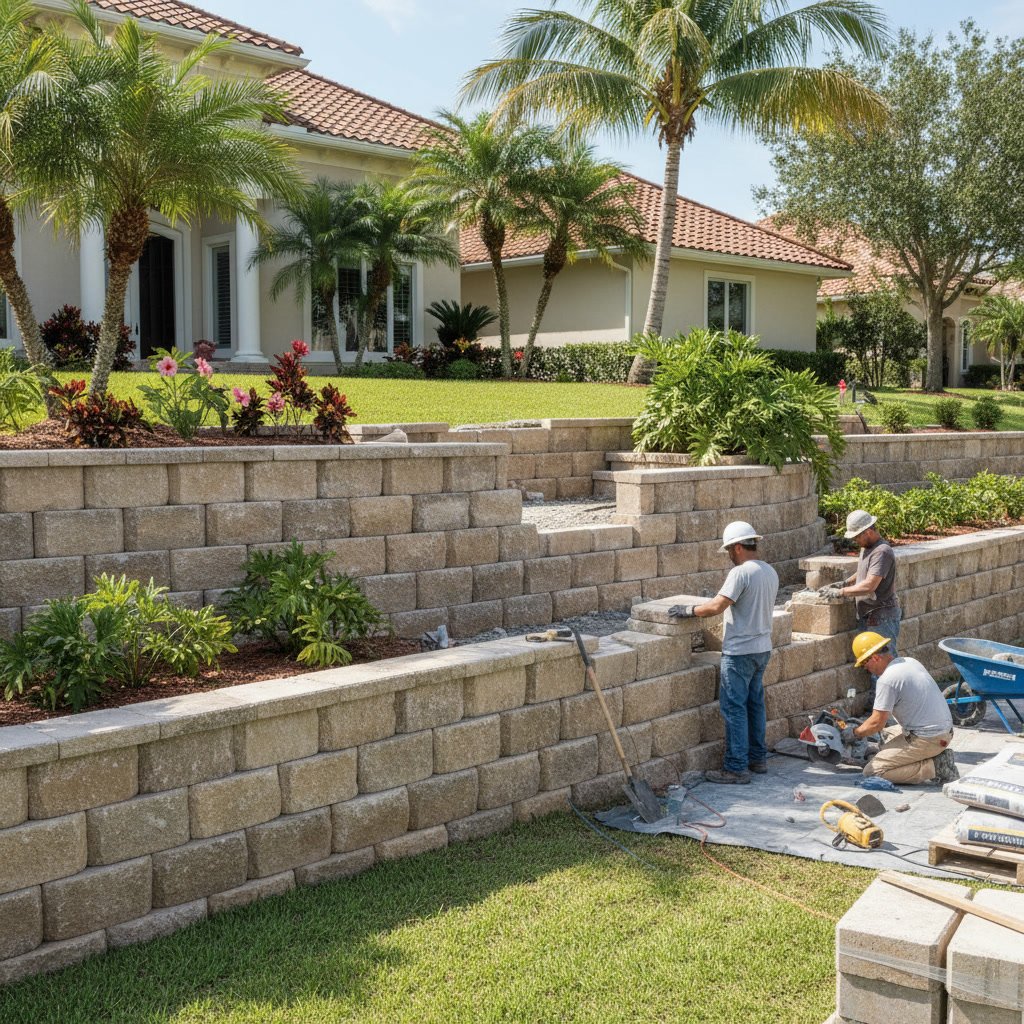
Your sloping yard or eroding landscape in Palm Beach Gardens needs a retaining wall that can handle Florida’s heat, humidity, and seasonal storms. The wrong block choice leads to cracking, shifting, and costly repairs within just a few years. Block retaining walls offer the perfect blend of strength, affordability, and design flexibility when you select materials engineered for South Florida’s demanding conditions.
This guide walks you through the best block materials available for retaining walls in Palm Beach Gardens, explaining what makes each option suitable for our coastal climate and how to match the right block to your specific project needs.
Why Block Choice Matters in Palm Beach Gardens
Palm Beach Gardens sits in a coastal zone where soil conditions, water tables, and weather patterns create unique challenges for retaining walls. The blocks you choose must resist moisture absorption, handle thermal expansion during scorching summers, and maintain structural integrity through hurricane-season downpours.
Poor block selection leads to efflorescence (that white, chalky residue), cracking from freeze-thaw cycles in rare cold snaps, and accelerated deterioration from salt air exposure. A retaining wall failure doesn’t just look bad. It threatens your property’s foundation, landscaping, and can even affect neighboring properties.
The right block materials provide decades of service with minimal maintenance when properly installed. Most quality block retaining walls in our area last 50 to 75 years, making your initial material choice one of the most important decisions in the project.
Concrete Masonry Units: The Industry Standard
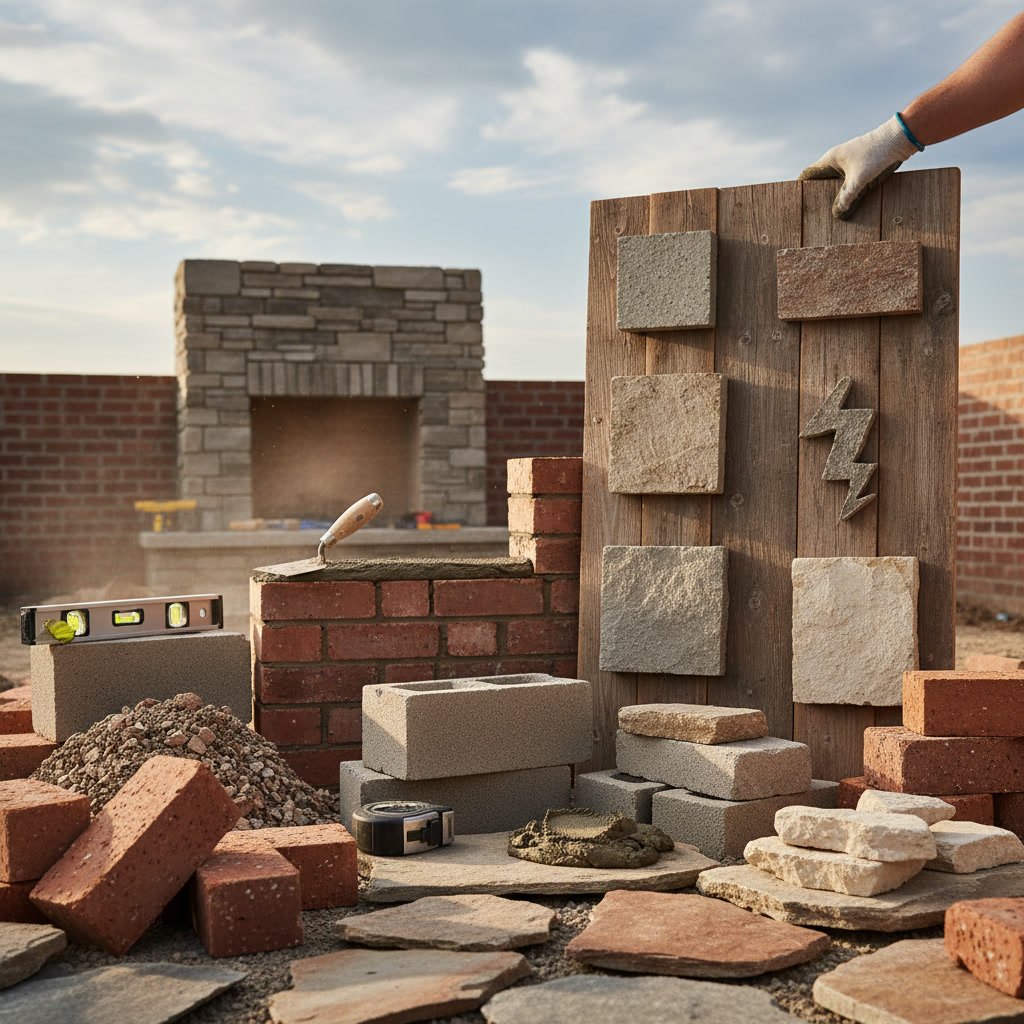
Concrete masonry units, or CMUs, represent the most common choice for block retaining walls across South Florida. These engineered blocks combine Portland cement, aggregate, and water in precise ratios to create reliable structural performance.
Standard CMUs for retaining walls measure 8 inches by 8 inches by 16 inches, though sizes vary based on wall height and engineering requirements. The blocks weigh between 30 and 40 pounds each, providing substantial mass that resists lateral soil pressure.
Hollow-Core vs. Solid Blocks
Hollow-core CMUs feature two or three large cavities that reduce weight and allow for vertical reinforcement. You can fill these cores with concrete and rebar to create a reinforced wall system capable of handling walls up to 8 or 10 feet tall.
Solid blocks eliminate the cavities, offering maximum compression strength. They work well for shorter walls (under 4 feet) where reinforcement isn’t necessary but added weight helps with stability.
Compression Strength Ratings
CMUs carry compression strength ratings from 1,900 PSI up to 3,000 PSI or higher. For most residential retaining walls in Palm Beach Gardens, blocks rated at 2,000 to 2,500 PSI provide adequate strength.
Higher PSI ratings cost more but prove necessary for taller walls, walls supporting additional loads (like a driveway or patio), or locations with poor soil conditions. Your masonry contractor can calculate the exact strength requirements based on your site’s engineering.
Interlocking Retaining Wall Blocks
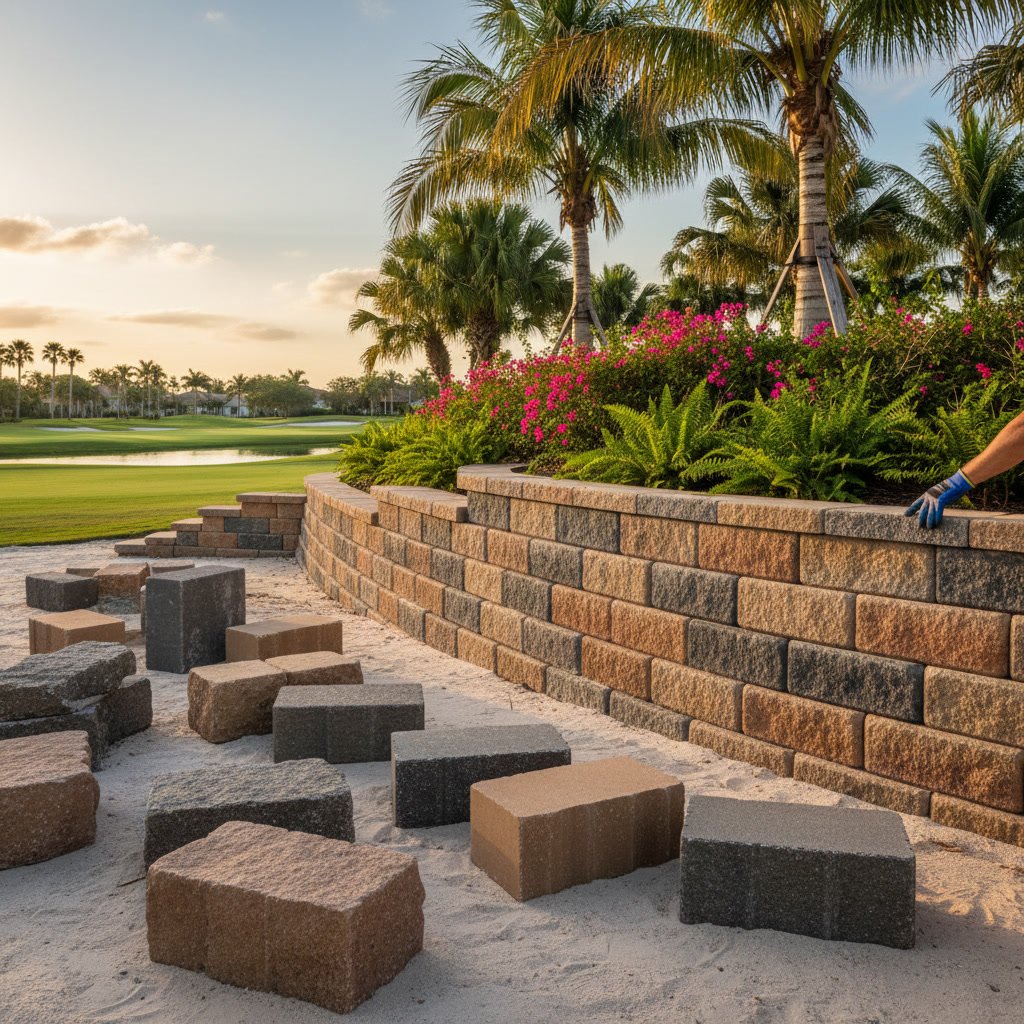
Interlocking blocks revolutionized residential retaining wall construction by eliminating the need for mortar in many applications. These specialized blocks feature a lip or pin system that locks each course to the one below, creating friction and setback that adds stability.
Unlike traditional CMUs, interlocking blocks install dry-stacked, meaning no mortar between courses. This approach allows for slight movement and drainage without cracking, making them ideal for Florida’s expansive soils.
Most interlocking systems handle walls up to 3 or 4 feet without reinforcement. Taller installations require geogrid reinforcement, which ties back into the soil mass behind the wall for additional support.
Texture and Color Options
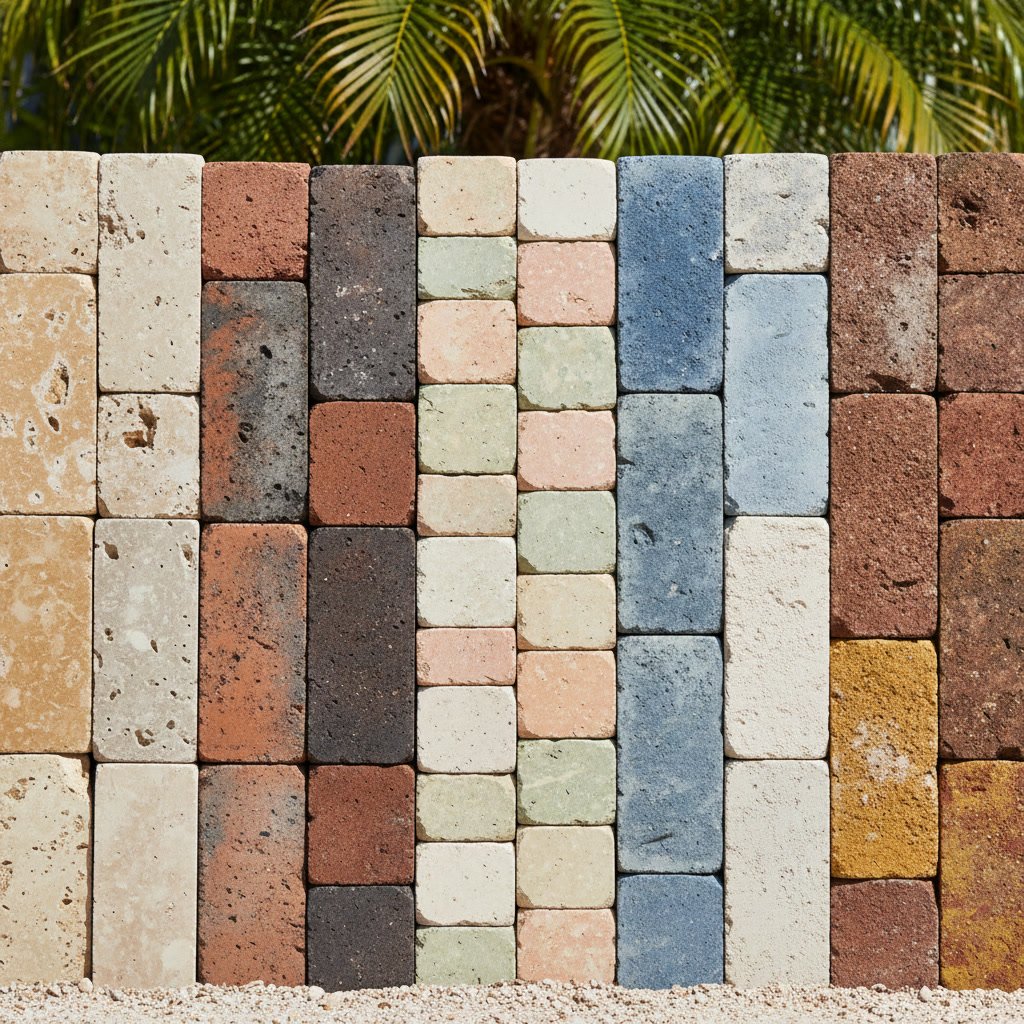
Interlocking blocks come in dozens of colors, textures, and face patterns. You can match existing hardscape, complement your home’s exterior, or create contrast with your landscaping.
Split-face finishes mimic natural stone, while smooth faces offer a contemporary look. Tumbled blocks provide an aged, weathered appearance straight from the factory. The variety lets you build a retaining wall that enhances curb appeal rather than just serving a functional purpose.
Pro Tip: Always purchase 5 to 10 percent extra blocks from the same production lot. Color variations between manufacturing runs can be noticeable, and you’ll want matching blocks available for future repairs or additions.
Besser Blocks for Heavy-Duty Applications
Besser blocks, named after the Besser Company that developed the manufacturing process, are heavy-duty concrete blocks with a distinctive appearance. These blocks typically measure larger than standard CMUs and feature pronounced vertical grooves on the face.
The extra mass and size make Besser blocks excellent for commercial applications or residential walls exceeding 6 feet in height. They handle significant lateral loads and provide excellent durability in coastal environments.
While Besser blocks cost more per unit than standard CMUs, the larger size means you need fewer blocks and less labor for installation. The trade-off often results in similar overall project costs for large walls.
Calcium Silicate Blocks for Premium Projects
Calcium silicate blocks combine sand and lime under high pressure and steam curing to create exceptionally dense, strong blocks. These premium units resist moisture absorption better than standard concrete blocks and offer superior dimensional accuracy.
The enhanced density provides better resistance to salt air corrosion, making calcium silicate blocks worth considering for properties near the Intracoastal or ocean. They maintain their appearance longer with less maintenance than standard concrete blocks.
The primary drawback is cost. Calcium silicate blocks typically run 40 to 60 percent more than comparable CMUs. However, for high-end homes or properties with harsh exposure conditions, the investment pays off in longevity and reduced maintenance.
Factors That Determine the Best Block for Your Wall
Selecting the optimal block material requires evaluating several site-specific factors beyond just appearance and budget. Each project presents unique challenges that favor certain block types over others.
Wall Height and Load Requirements
Walls under 3 feet can often use interlocking blocks without reinforcement, making them the most economical choice. Heights from 3 to 6 feet typically require either reinforced CMUs or interlocking blocks with geogrid.
Anything over 6 feet demands engineering calculations, potentially including reinforced CMUs with grouted cores, steel reinforcement, and proper footing design. At these heights, the structural requirements drive block selection more than aesthetics or cost.
Soil Conditions and Drainage
Palm Beach Gardens features a mix of sandy soils near the coast and heavier clay-based soils inland. Sandy soils drain well but offer less lateral support, favoring interlocking blocks that can flex slightly. Clay soils hold moisture and create more lateral pressure, requiring stronger CMU construction.
High water tables common throughout South Florida demand excellent drainage systems regardless of block choice. Proper masonry maintenance includes keeping weep holes clear and ensuring the drainage aggregate behind the wall doesn’t clog with silt.
Exposure to Salt Air
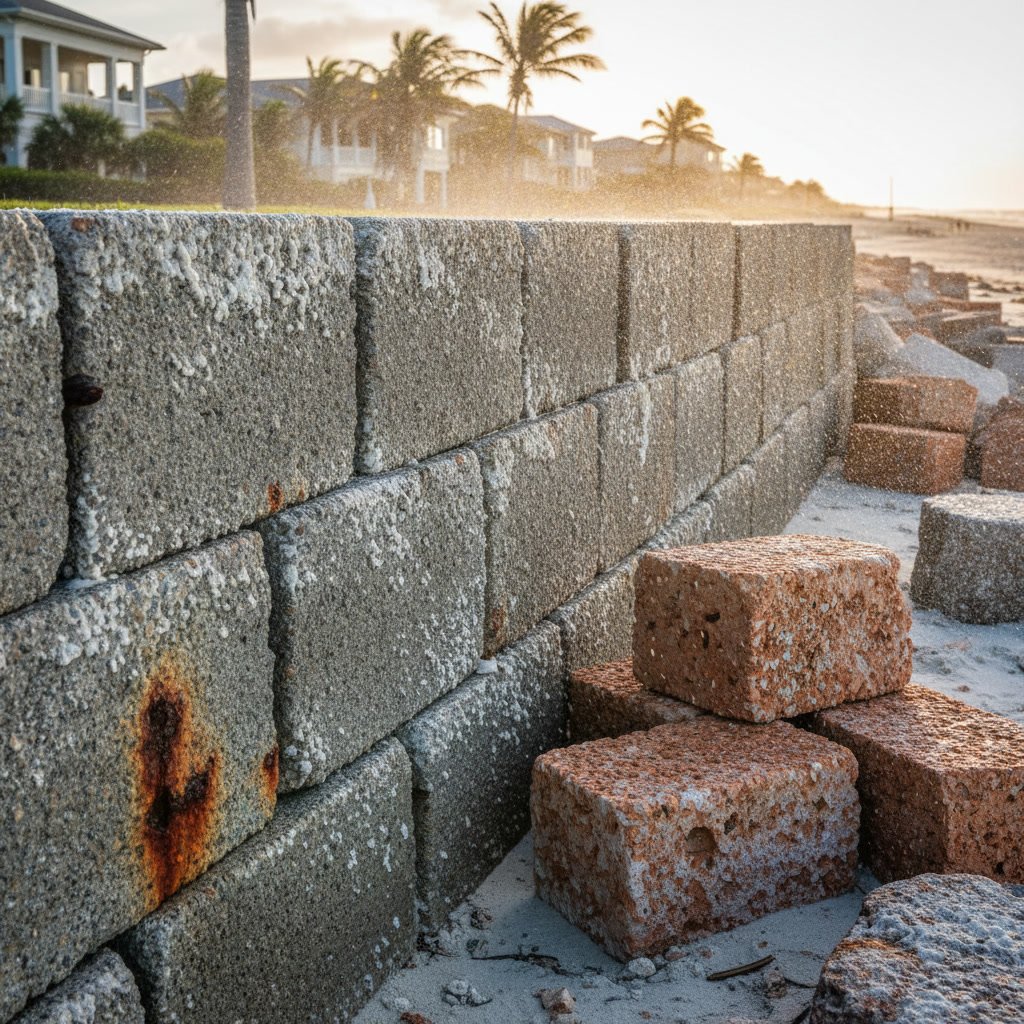
Properties within two miles of the ocean or Intracoastal Waterway face accelerated deterioration from salt spray. Block retaining walls in these locations benefit from sealers applied every three to five years and blocks with lower absorption rates.
Calcium silicate blocks or premium-grade CMUs with integral water repellents perform better in these harsh conditions. The extra upfront cost avoids premature replacement and constant repairs common with standard blocks in coastal zones.
Installation Quality Matters More Than Block Brand
Even the best block materials fail when installed improperly. A retaining wall needs a compacted base, proper drainage, adequate setback or batter, and reinforcement appropriate to its height and load.
The base should extend at least 6 inches beyond the wall face on each side and reach below the frost line (less critical in Florida but still important for stability). Drainage aggregate at least 12 inches thick must extend the full height of the wall, with perforated pipe at the base.
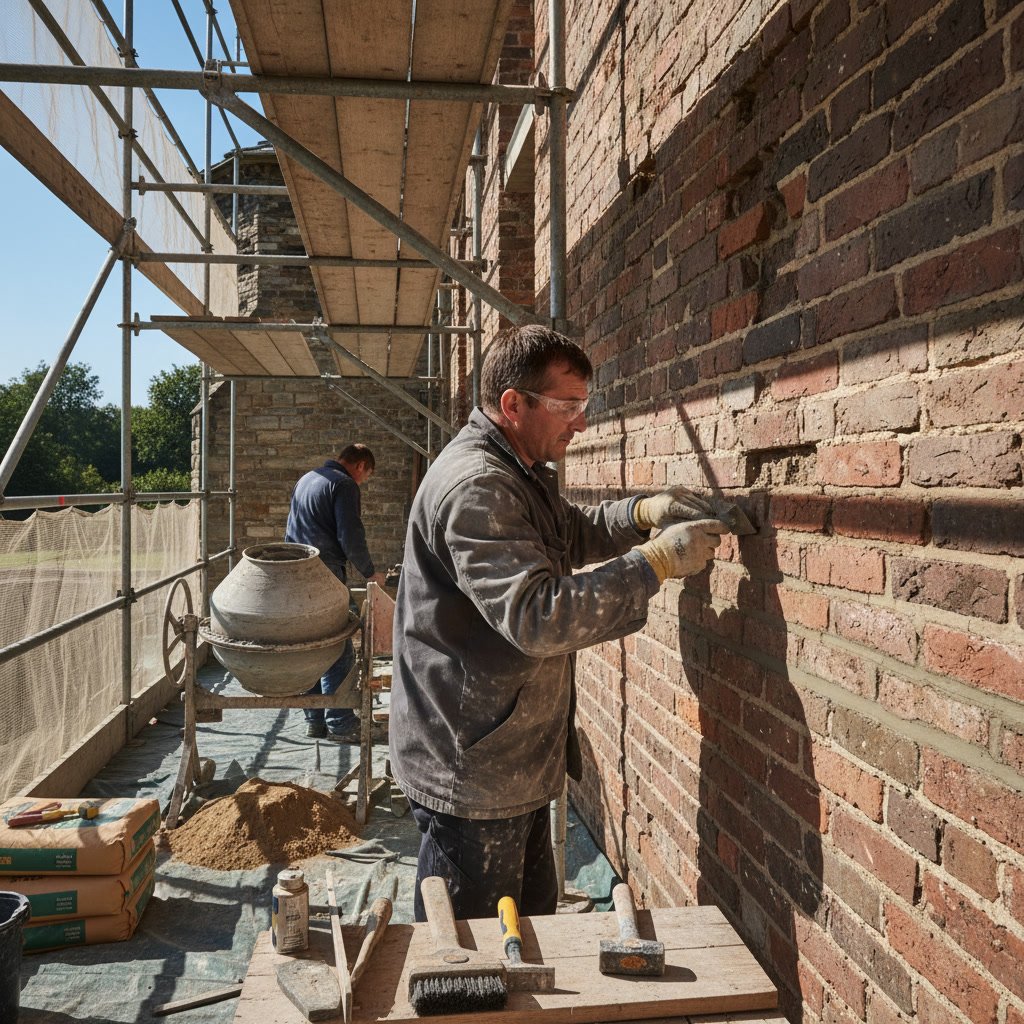
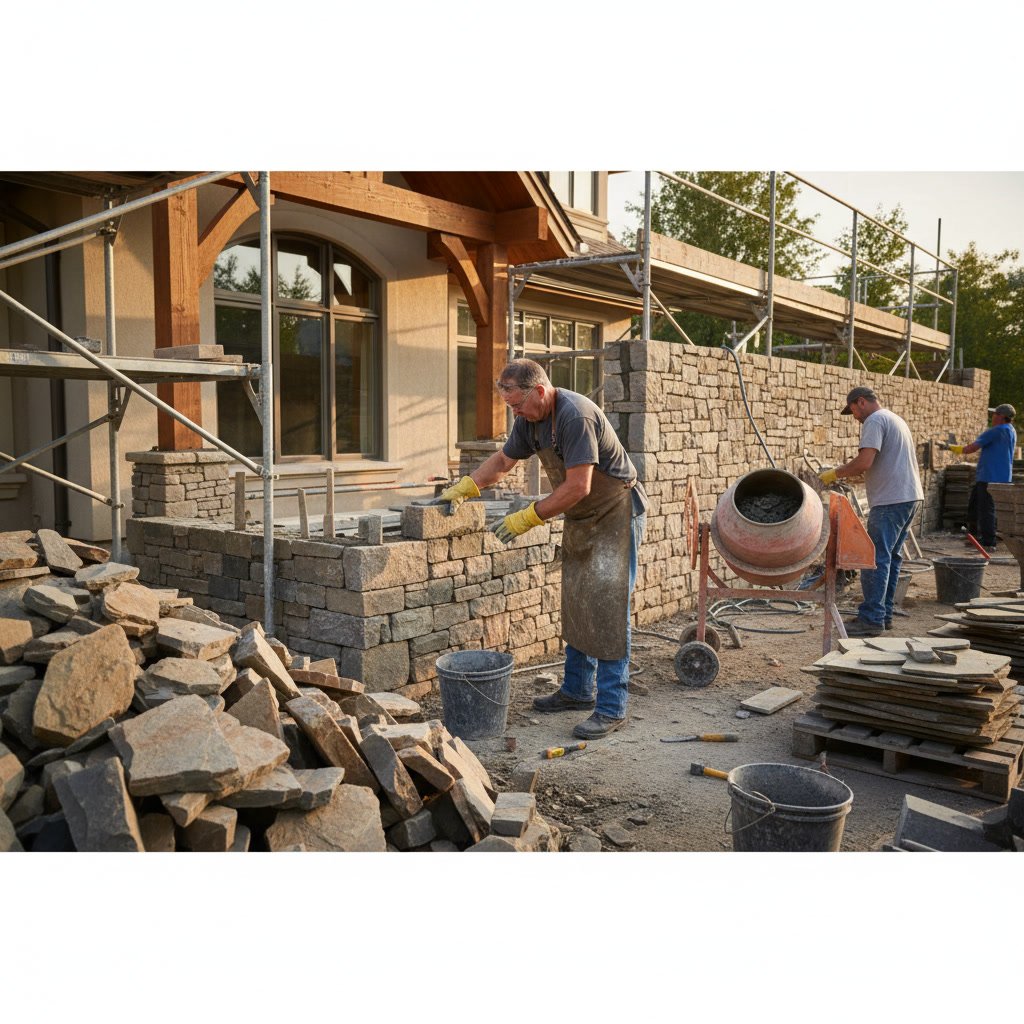
Working with experienced masonry contractors familiar with local soil conditions and building codes ensures your block retaining walls perform as designed. Mark Pecoraro Masonry LLC brings over 40 years of expertise to every masonry project, understanding which blocks and techniques work best throughout Palm Beach County.
Maintenance and Longevity Considerations
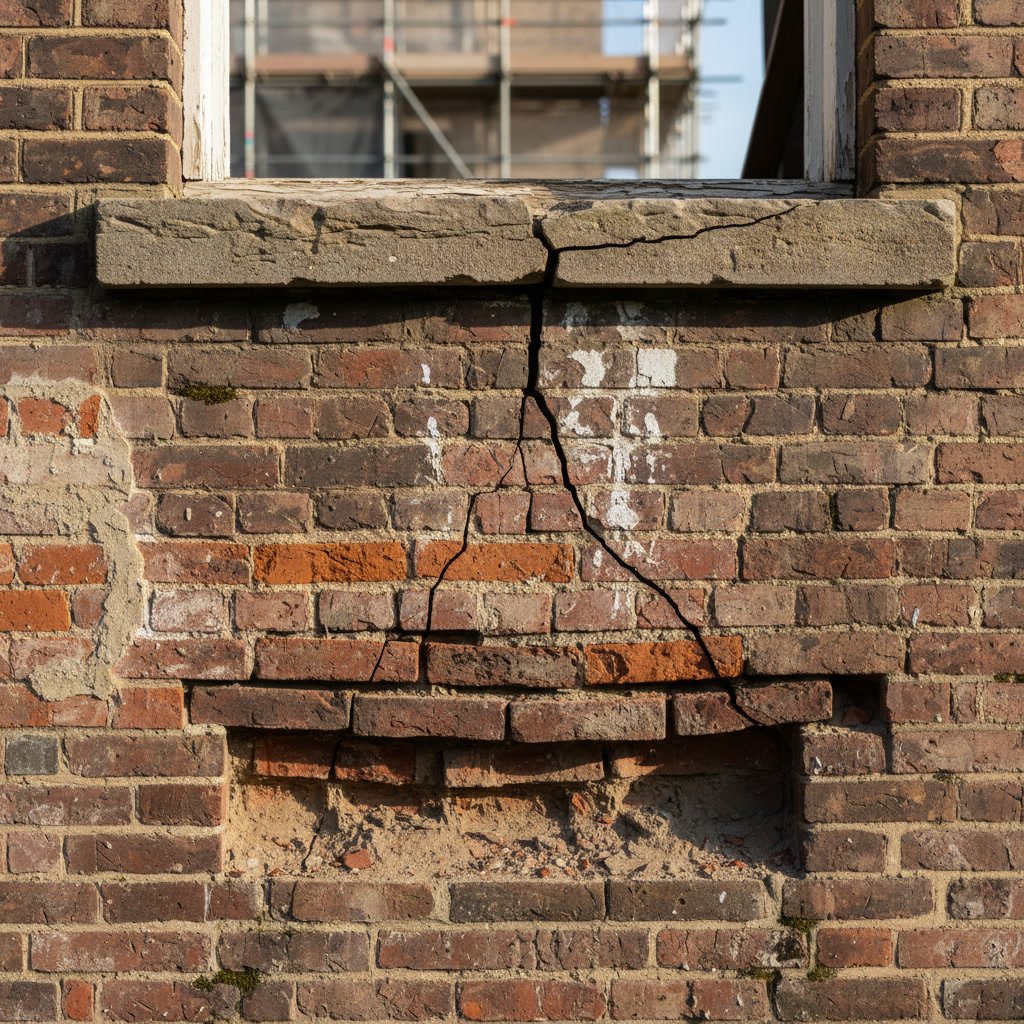
Block retaining walls require minimal but important ongoing maintenance to achieve their full lifespan. Annual inspections should check for cracks, bulging, tilting, or separation between blocks that might indicate foundation problems or excessive pressure.
Clean weep holes and drainage outlets each spring and fall to prevent water buildup behind the wall. Trapped water creates hydrostatic pressure that can push walls forward or cause sudden failure during heavy rains.
Applying a breathable masonry sealer every three to five years protects against moisture intrusion, efflorescence, and staining. The sealer should allow water vapor to escape while blocking liquid water absorption, crucial for Florida’s humid climate.
Minor cracks or loose blocks caught early cost far less to repair than waiting until the wall fails. Professional masonry repairs address small issues before they become major structural problems.
Cost Comparison of Block Materials
Budget planning for a retaining wall project must account for both material and installation costs. Block prices alone don’t tell the full story, since different materials require varying labor, equipment, and site preparation.
Standard CMUs typically cost $2 to $4 per block, making them the most economical choice for straightforward applications. Interlocking retaining wall blocks range from $3 to $12 per block depending on size, finish, and brand.
Besser blocks and other heavy-duty options run $5 to $10 per block, while premium calcium silicate blocks can reach $8 to $15 per block. Installation costs generally range from $25 to $50 per square foot of wall face, varying with height, access, and soil conditions.
A typical 50-foot-long, 4-foot-tall retaining wall might require 600 to 800 blocks and cost $5,000 to $12,000 installed, depending on materials and site challenges. Obtaining detailed estimates from qualified contractors helps you budget accurately for your specific project.
Frequently Asked Questions
How long do block retaining walls last in Palm Beach Gardens?
Properly constructed block retaining walls in Palm Beach Gardens typically last 50 to 75 years with routine maintenance. Coastal properties may see slightly shorter lifespans due to salt exposure, while inland walls often exceed these estimates. The key factors are quality installation, adequate drainage, and periodic sealing.
Do I need a permit for a block retaining wall in Palm Beach Gardens?
Most walls over 3 feet in height require building permits in Palm Beach Gardens and surrounding municipalities. Even shorter walls may need permits if they support additional loads or sit on property lines. Your masonry contractor should verify local requirements and handle permit applications as part of their service.
Can I build a block retaining wall myself?
Walls under 3 feet using interlocking blocks are feasible DIY projects for homeowners with basic construction skills. Taller walls or those requiring reinforcement should be left to professionals due to the engineering, equipment, and expertise needed. Improper installation creates safety hazards and expensive failures.
What causes block retaining walls to fail?
The most common failure causes are inadequate drainage leading to hydrostatic pressure, insufficient base preparation, missing or improper reinforcement, and poor soil compaction behind the wall. Foundation settlement, tree roots, and erosion also contribute to wall problems over time.
How much does it cost to repair a failing block retaining wall?
Minor repairs like repointing mortar or replacing a few damaged blocks cost $500 to $2,000. Partial wall reconstruction runs $3,000 to $8,000 depending on length and height. Complete wall replacement costs similar to new construction, typically $25 to $50 per square foot. Catching problems early keeps repair costs manageable.
Choosing Your Block Retaining Wall Partner
The right block materials combined with expert installation create retaining walls that protect your property and enhance its value for decades. Understanding the options available helps you make informed decisions, but working with experienced professionals ensures those decisions translate into lasting results.
Mark Pecoraro Masonry LLC serves Palm Beach Gardens, Boca Raton, Jupiter, and surrounding communities with over 40 years of masonry expertise. Whether you need a decorative garden wall or a substantial retaining structure, our team brings the technical knowledge and craftsmanship to match the right blocks to your project. Contact us at +15619510233 to discuss your retaining wall project and receive a detailed assessment of the best materials for your specific needs.