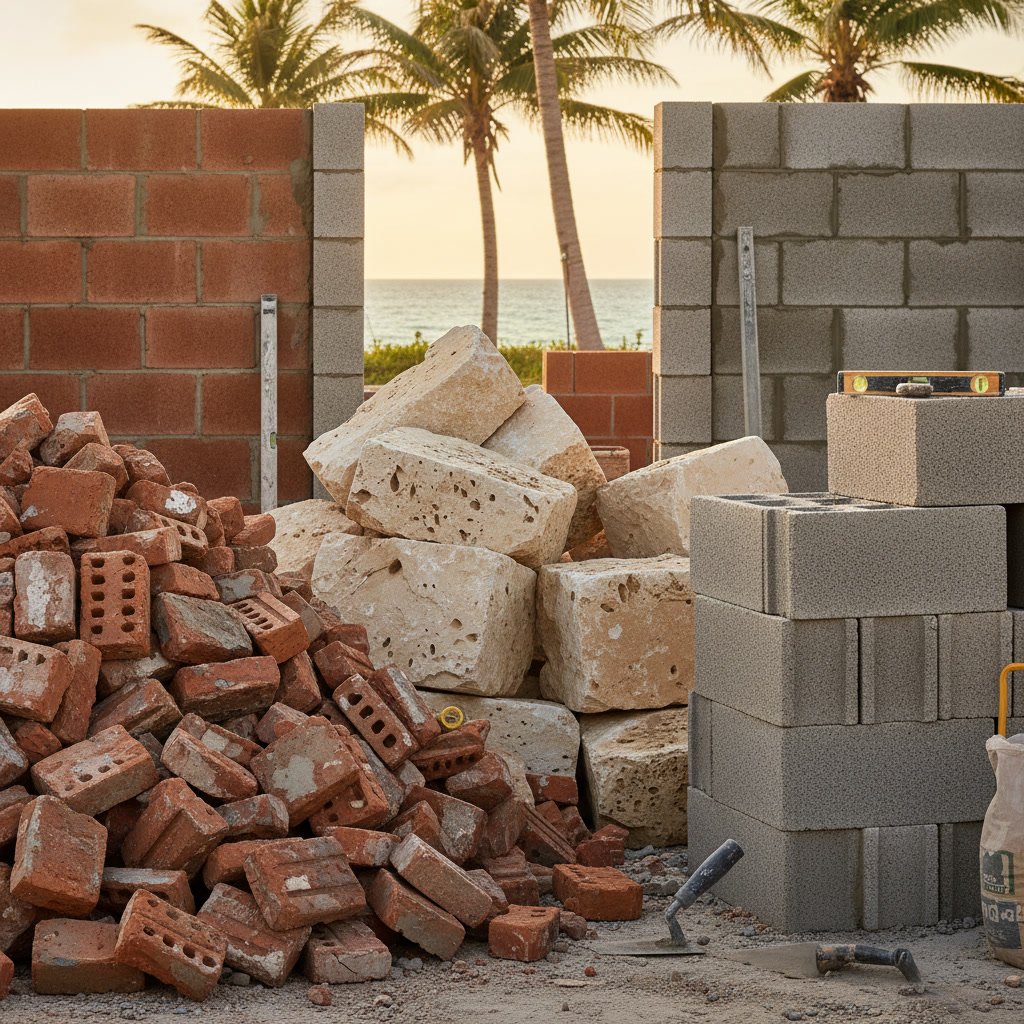
Your Riviera Beach property deserves masonry materials that can withstand coastal humidity, salt air, and intense Florida sun while delivering the aesthetic you envision. The choice between brick, stone, or block affects everything from your project budget to long-term maintenance requirements. Understanding the strengths and limitations of brick stone or block materials helps you select the option that best serves your home’s structure, climate demands, and design goals.
This guide examines each material’s performance characteristics, cost considerations, and ideal applications for residential and commercial properties throughout Riviera Beach and surrounding areas.
Understanding Each Material’s Core Properties
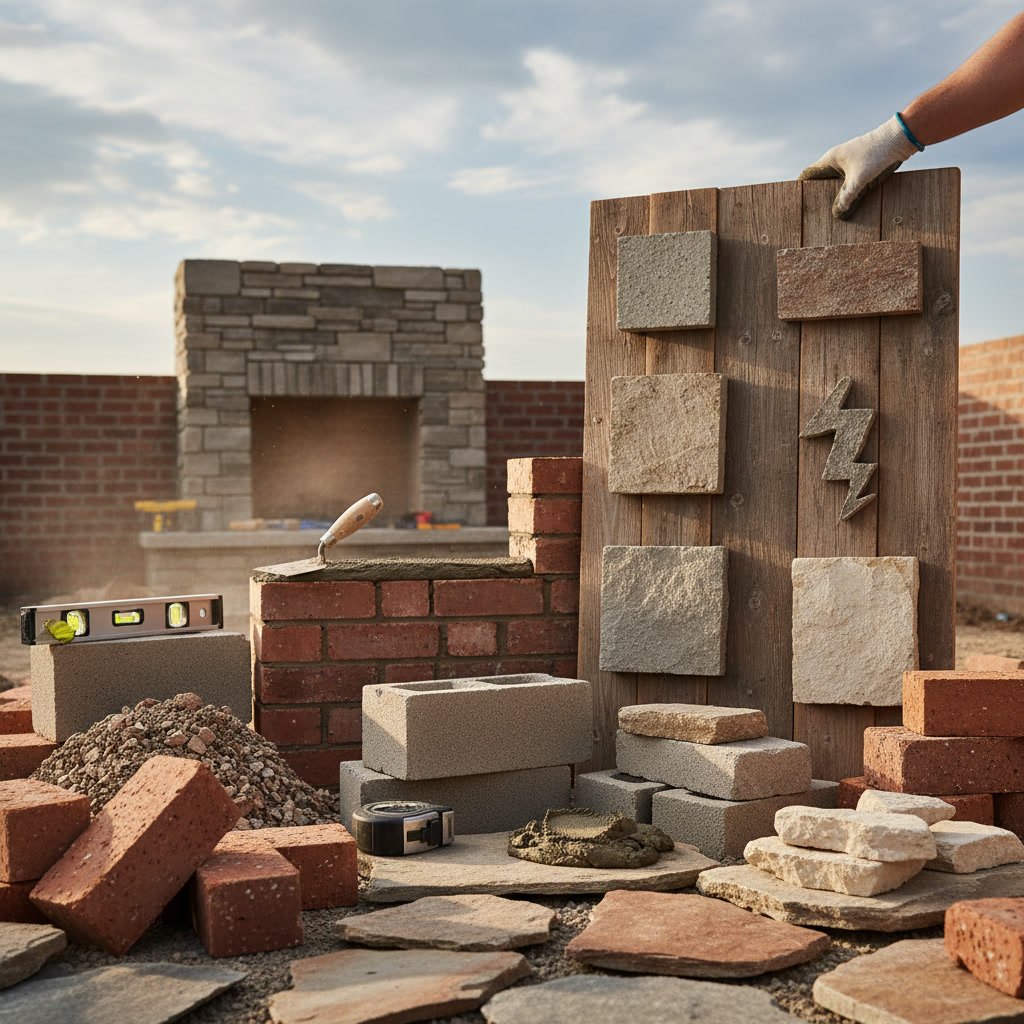
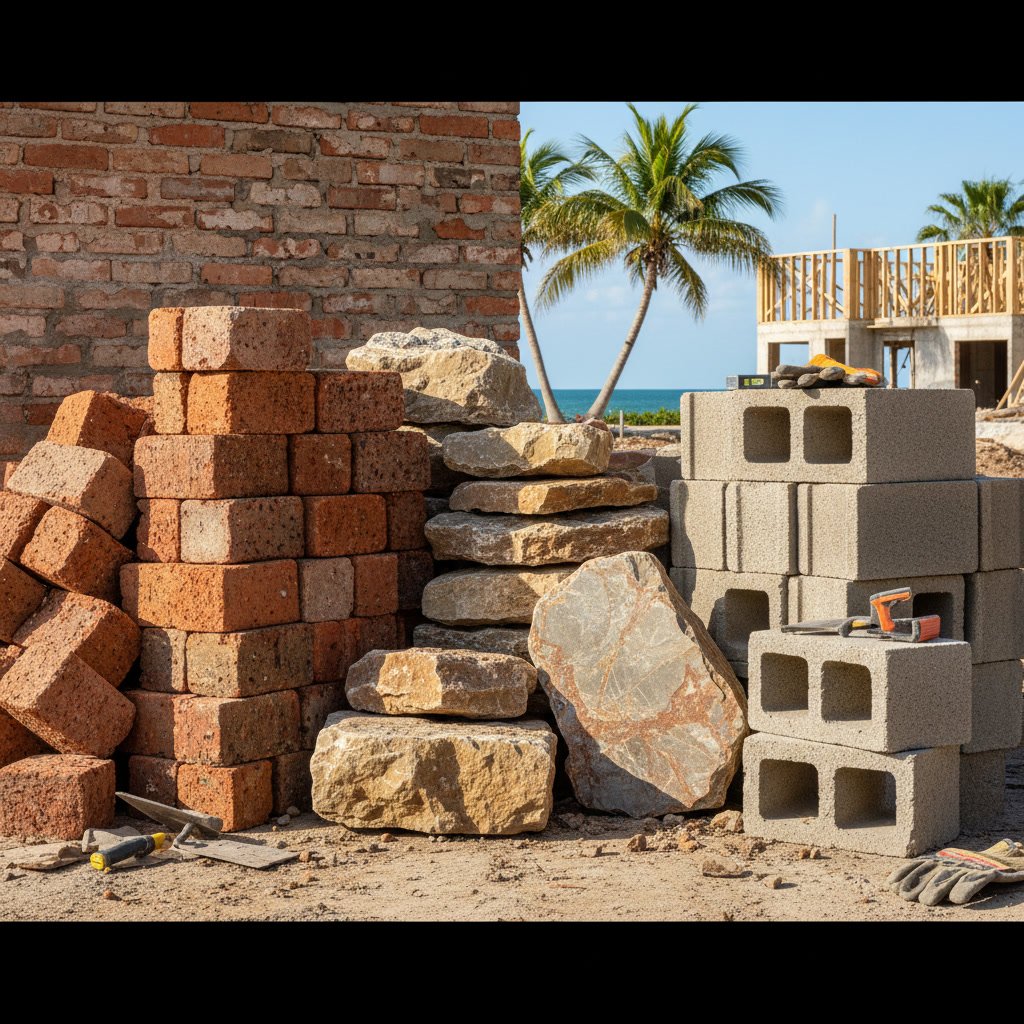
Brick, stone, and block each bring distinct structural and aesthetic qualities to masonry projects. Their composition determines durability, installation requirements, and suitability for different applications.
Brick consists of fired clay molded into uniform rectangular units. Standard modular bricks measure approximately 3.625 inches by 2.25 inches by 7.625 inches, though dozens of sizes exist. The firing process creates a dense, weather-resistant material available in red, brown, tan, and gray tones.
Natural stone includes granite, limestone, marble, sandstone, and fieldstone sourced from quarries. Each stone type offers unique color variations, textures, and structural characteristics. Stone dimensions vary widely, from thin veneer pieces under one inch thick to massive blocks weighing hundreds of pounds.
Concrete block, often called CMU (concrete masonry unit), combines cement, aggregate, and water formed into hollow or solid units. Standard blocks measure 8 inches by 8 inches by 16 inches. Modern blocks can be smooth, split-face, or textured to mimic natural stone.
Durability and Weather Resistance in Coastal Environments
Riviera Beach’s coastal location subjects exterior masonry to relentless environmental stress. Salt spray, high humidity, tropical storms, and temperature fluctuations test every material’s limits.
Clay brick performs exceptionally well in coastal climates. The firing process creates a material largely impervious to water absorption when properly installed. Quality brick resists salt damage, won’t rot or corrode, and maintains structural integrity for 100 years or more. Brick’s thermal mass helps regulate interior temperatures, reducing cooling costs in Florida’s heat.
Natural stone offers unmatched longevity when properly selected and installed. Dense stones like granite resist weathering for centuries. However, softer stones such as limestone and sandstone can deteriorate more quickly in salt air without proper sealing and maintenance. Stone’s weight and density provide excellent structural strength and sound insulation.
Concrete block delivers solid performance in coastal applications but requires proper surface treatment. Unsealed block absorbs moisture, leading to efflorescence (white salt deposits), cracking from freeze-thaw cycles, and accelerated deterioration. Quality sealants and stucco finishes protect block from moisture penetration and extend service life to 50 years or more.
Pro Tip: In Riviera Beach’s salt air environment, apply breathable masonry sealant to all exterior masonry surfaces every three to five years. This simple maintenance step dramatically extends material life and prevents costly repairs.
Cost Comparison for Materials and Installation
Budget constraints often narrow material choices before aesthetic preferences enter the equation. Understanding both material costs and installation labor helps you plan realistically.
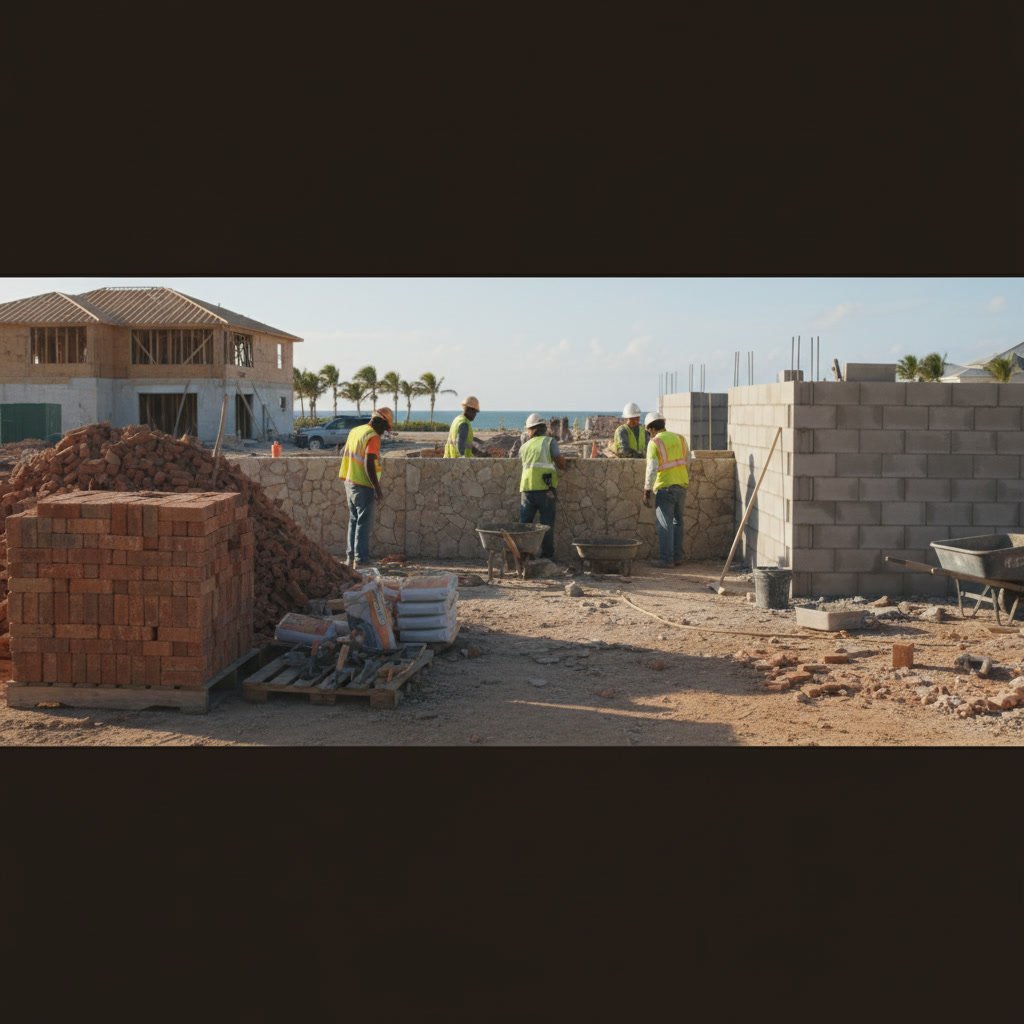
Concrete block represents the most economical choice for structural applications. Standard 8x8x16 blocks cost between $1.50 and $3.00 per unit. A wall covering 100 square feet requires approximately 112 blocks, totaling $170 to $335 in materials. Installation labor runs $10 to $15 per square foot for basic block walls.
Brick falls in the mid-range price category. Face brick suitable for exterior applications costs $0.50 to $1.50 per brick. That same 100-square-foot wall requires roughly 700 bricks, totaling $350 to $1,050 in materials. Masonry installation labor for brick runs $15 to $30 per square foot, reflecting the precision required for proper coursing and mortar joints.
Natural stone commands premium pricing. Stone veneer costs $6 to $20 per square foot for materials alone. Full-thickness stone ranges from $20 to $50 per square foot for materials. Installation labor varies widely based on stone type and pattern complexity, typically ranging from $25 to $50 per square foot. Specialty stones and intricate patterns push costs higher.
These figures reflect 2024 pricing in the Palm Beach County area and exclude site preparation, foundation work, and finishing details that affect total project costs.
Best Applications for Each Material Type
Matching material properties to specific project requirements ensures optimal performance and value. Each material excels in particular applications while proving less suitable for others.
When Brick Makes the Best Choice
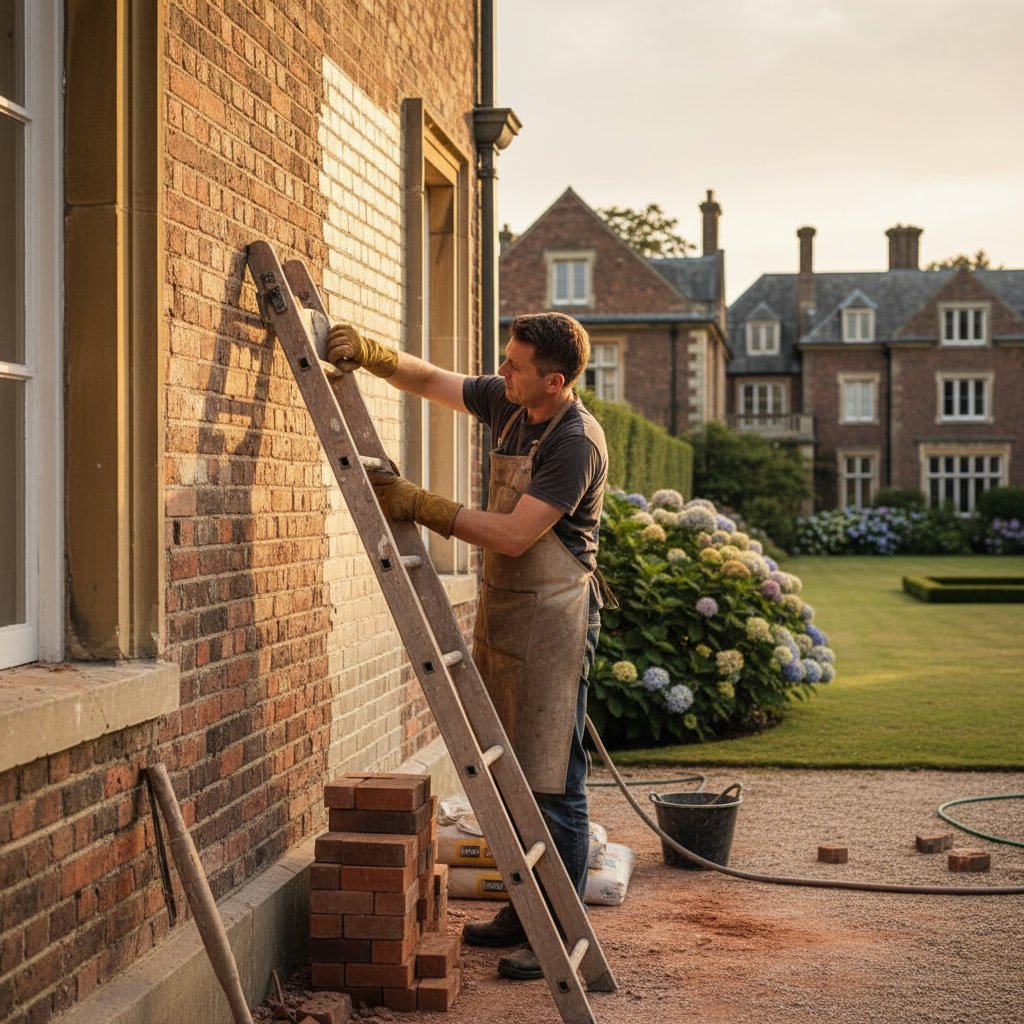
Brick delivers superior performance for exterior walls, garden walls, walkways, and architectural accents. Its uniform dimensions simplify installation while creating clean, professional lines. Brick’s natural color variations add visual interest without appearing busy or chaotic.
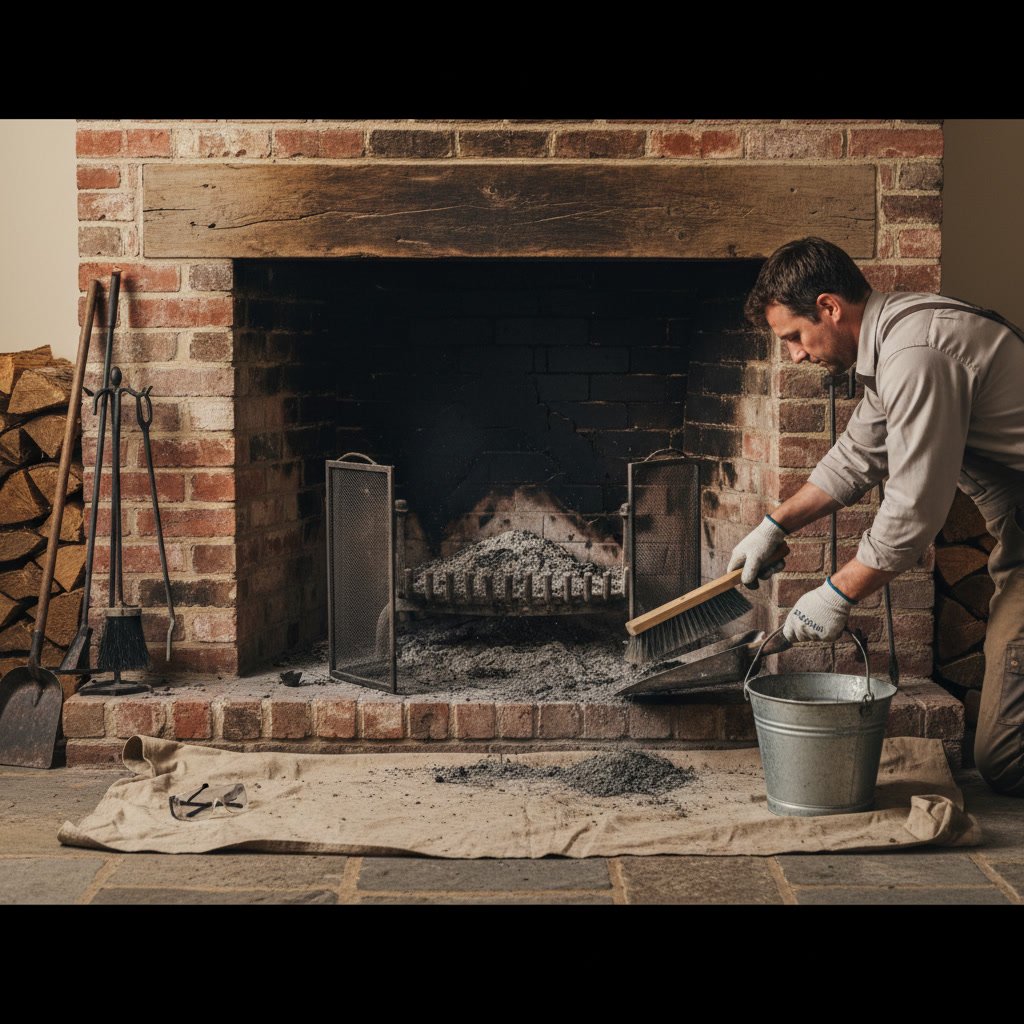
Fireplaces and chimneys represent ideal brick applications. Firebrick varieties withstand temperatures exceeding 2,000 degrees Fahrenheit without cracking or deteriorating. Brick’s thermal properties allow safe heat containment while radiating warmth efficiently. Many homeowners choose brick for outdoor fireplace projects throughout South Florida.
Property entrance features, mailbox structures, and columnar accents showcase brick’s versatility. The material accepts paint if you want color flexibility, though most owners prefer brick’s natural tones.
When Stone Delivers Maximum Value
Natural stone creates unmatched visual impact for focal points and high-visibility features. Stone veneers transform plain concrete block walls into architectural statements without the cost and weight of full-thickness stone.
Pool decks, patios, and outdoor living spaces benefit from stone’s natural texture and heat-reflecting properties. Unlike concrete that absorbs and radiates heat, many stones remain cooler underfoot during summer months.
Stone excels for retaining walls on sloped properties. Its weight and irregular shapes create stable, interlocking structures that resist lateral soil pressure. The natural appearance blends beautifully with landscaping.
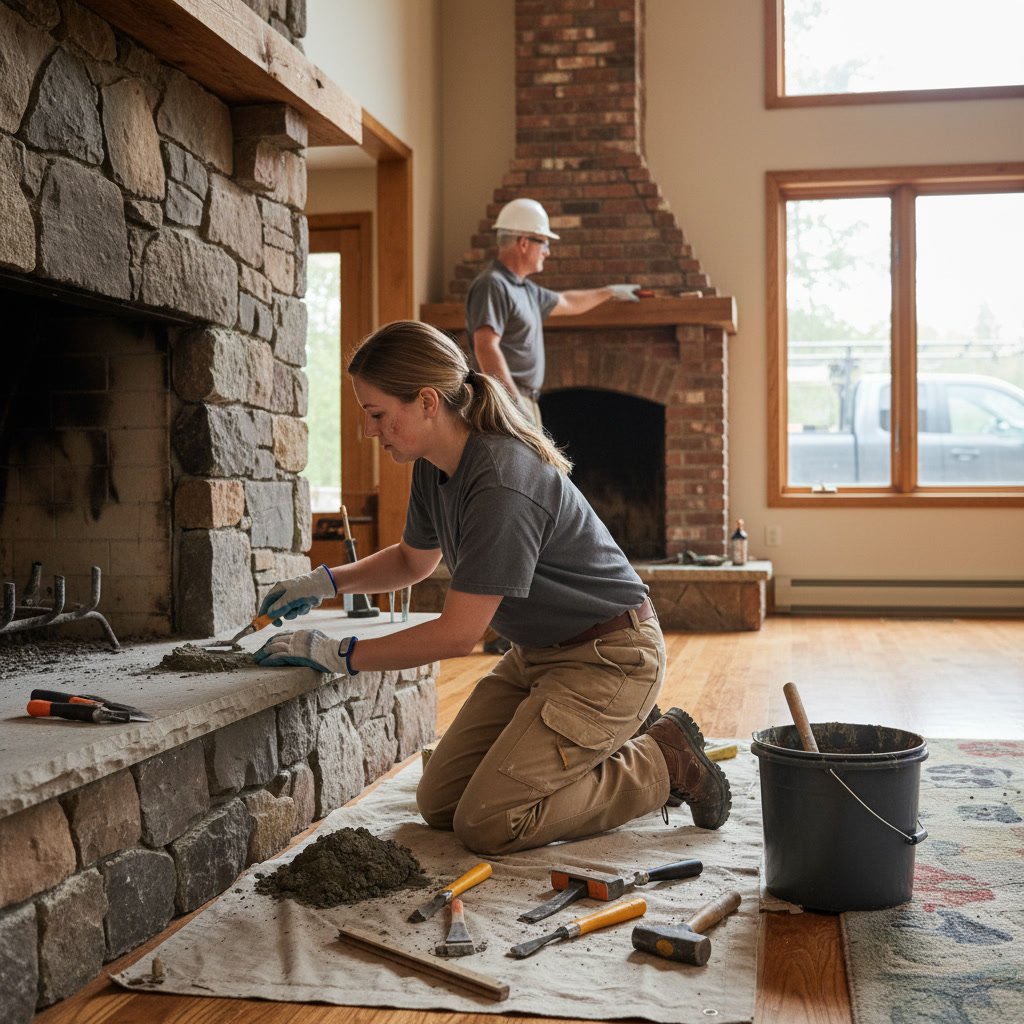
Interior applications including accent walls, fireplace surrounds, and entryway features showcase stone’s organic beauty while avoiding the weathering concerns of exterior installations.
When Block Provides the Smart Solution
Concrete block serves as the foundation for countless Florida homes and commercial buildings. Its hollow core design accepts vertical and horizontal reinforcement bars, creating strong, hurricane-resistant structures that meet strict building codes.
Block walls provide excellent sound insulation for property boundaries, making them ideal for homes near busy streets or commercial areas. The material’s fire resistance offers important safety benefits for both residential and commercial applications.
Utility structures, storage buildings, and workshop walls benefit from block’s economy and speed of installation. Larger block dimensions mean faster construction compared to brick.
Stucco-finished block creates the popular Mediterranean and Spanish Colonial looks seen throughout Riviera Beach. This combination delivers attractive finished walls at reasonable cost.
Maintenance Requirements Over Time
Long-term ownership costs include regular maintenance to preserve appearance and structural integrity. The right material choice considers your willingness and ability to perform ongoing upkeep.
Brick requires minimal maintenance when properly installed. Annual inspections should check for cracked or spalled bricks, deteriorating mortar joints, and efflorescence. Repointing mortar joints every 25 to 30 years maintains weather protection and structural stability. Pressure washing removes surface dirt and organic growth without damaging the material.
Stone maintenance varies by stone type. Dense stones need only occasional cleaning with appropriate pH-neutral cleaners. Porous stones require periodic sealing to prevent staining and moisture absorption. Inspect stone regularly for cracks or displacement, particularly in retaining walls and high-stress applications.
Block demands more attention in coastal environments. Sealed or stucco-finished block needs inspection for cracks, chips, and coating failure. Repair damage promptly to prevent moisture infiltration. Reapply sealants or refresh stucco finishes every five to 10 years depending on exposure and product quality. Professional masonry maintenance services help protect your investment.
Key Takeaway: Deferred maintenance on any masonry material costs far more to correct than preventive care. Small cracks and minor mortar deterioration become major structural repairs when ignored. Schedule annual inspections with experienced masonry professionals.
Design Flexibility and Aesthetic Considerations
Material choice profoundly impacts your property’s curb appeal and architectural character. Understanding each material’s aesthetic range helps align your selection with design goals.
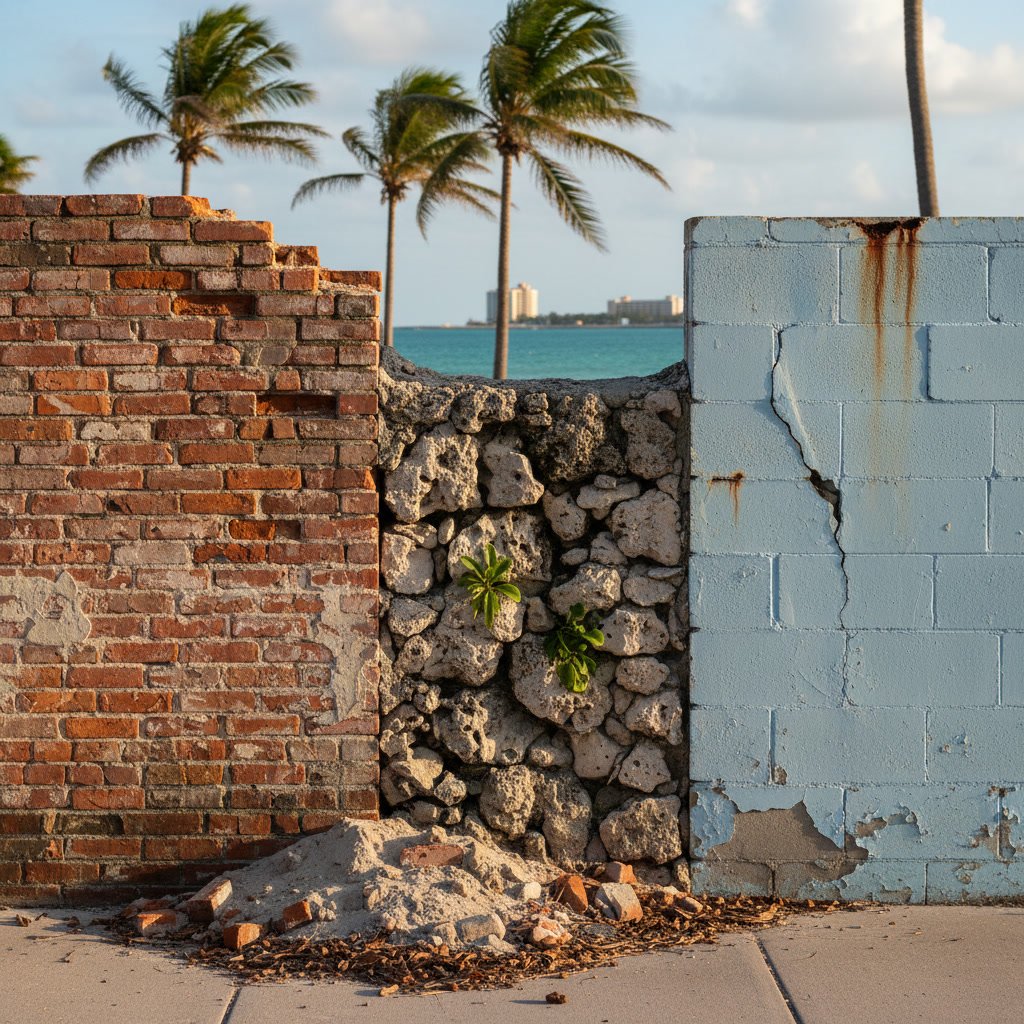
Brick offers substantial design flexibility through color selection, laying patterns, and joint treatments. Running bond, Flemish bond, English bond, and basket weave patterns create different visual effects. Mortar color choices from white to charcoal further customize appearance. Brick complements traditional, colonial, and craftsman architectural styles while adapting to contemporary designs.
Stone provides unlimited aesthetic possibilities. Fieldstone creates rustic, organic appearances. Cut stone delivers formal, geometric patterns. Stone veneers mimic full-thickness stone appearance at reduced cost and weight. Color palettes span earth tones through dramatic blacks and brilliant whites. Stone suits virtually any architectural style from Mediterranean villas to modern minimalist designs.
Block’s utilitarian appearance requires finishing treatments for most residential applications. Stucco, paint, or stone veneer transform basic block into attractive finished surfaces. Split-face block units offer texture and visual interest without additional finishing. Block works well for modern industrial aesthetics when left exposed and sealed.
Mixing materials creates dynamic, sophisticated results. Brick columns with stucco-finished block walls, stone accents against painted block, or brick arches over stone veneer walls combine materials’ best attributes while managing costs.
Structural Considerations and Building Codes
Building codes and engineering requirements sometimes dictate material choices regardless of aesthetic preferences or budget considerations. Understanding these constraints early prevents costly design changes.
Load-bearing applications require materials and installation methods that meet specific compressive strength ratings. Reinforced concrete block typically serves as the primary structural material for foundations and load-bearing walls in Florida construction. Brick and stone function as veneer materials attached to block or wood frame structures rather than providing primary structural support.
Wind load requirements in coastal areas demand proper reinforcement and connection details. Hurricane straps, rebar placement, and anchor spacing must comply with current Florida Building Code standards. These requirements affect material selection and installation costs.
Height restrictions and setback requirements may limit certain applications. Retaining walls exceeding four feet often require engineering calculations and permits regardless of material choice. Property line walls face height restrictions that vary by municipality.
Historic district regulations sometimes mandate specific materials and installation methods to preserve neighborhood character. Verify local requirements before finalizing material selections for properties in designated historic areas.
Making Your Final Material Selection
Choosing between brick stone or block requires weighing multiple factors against your specific project requirements and constraints. Start by identifying your non-negotiable requirements.
Budget constraints often establish the baseline. Determine your total available budget including materials, labor, site preparation, and contingency funds. Eliminate materials that exceed your financial capacity while remembering that the cheapest option may cost more long-term through higher maintenance or premature replacement.
Performance requirements narrow choices based on structural demands, weather exposure, and functional needs. Load-bearing applications typically require block. High-heat applications demand brick or stone. Sound insulation priorities favor block’s mass and density.
Aesthetic goals reflect personal taste and architectural compatibility. Material choice should enhance your property’s character rather than clash with existing elements. Consider how materials age and weather in your specific environment.
Maintenance capacity deserves honest assessment. If you prefer minimal upkeep, favor materials requiring less frequent attention. If you enjoy hands-on property care, higher-maintenance materials become viable options.
Professional consultation provides invaluable guidance. Experienced masonry contractors offer insights into material performance, installation challenges, and cost-effective solutions specific to your project and location. Site-specific factors including soil conditions, drainage, sun exposure, and access affect material suitability in ways that generic advice cannot address.
Frequently Asked Questions
Which lasts longer in Florida’s climate, brick or concrete block?
Quality brick typically outlasts concrete block in coastal Florida environments. Properly installed brick remains structurally sound for 100 years or more with minimal maintenance, while concrete block generally provides 50 to 75 years of service when properly sealed and maintained. However, reinforced block with quality stucco finish can approach brick’s longevity when protected from direct moisture exposure.
Can I use natural stone for a load-bearing wall in Riviera Beach?
Natural stone can serve as a load-bearing material, but modern building codes and practical considerations usually favor reinforced concrete block for structural applications. Stone typically functions as a veneer over block or frame structures in contemporary construction. Full-thickness stone walls require substantial footings, specialized engineering, and skilled installation that significantly increase costs compared to block construction.
How do I match new masonry to existing brick or stone on my property?
Matching existing masonry requires obtaining samples of your current material for comparison. Brick manufacturers discontinue colors and styles over time, so exact matches may prove impossible for older homes. Experienced masons can identify suitable substitute products or create intentional contrast that complements rather than attempts perfect matching. For stone, quarry sourcing becomes critical since each quarry produces unique colors and patterns.
Does painted brick or block require more maintenance than unpainted masonry?
Painted masonry surfaces require repainting every five to 10 years depending on exposure, paint quality, and surface preparation. Paint also traps moisture if applied over inadequately sealed masonry, potentially causing deterioration. Unpainted brick and sealed block need less frequent maintenance. Once you paint masonry, removing paint for a natural finish requires expensive chemical stripping or abrasive blasting that may damage the underlying material.
Which material provides the best return on investment for resale value?
Natural stone typically commands the highest perceived value among homebuyers, followed by brick, then painted or stucco-finished block. However, return on investment depends heavily on neighborhood standards and overall home value. Premium stone on a modest home may not return its cost, while quality brick appropriate to the neighborhood usually provides solid returns. The best ROI comes from well-executed masonry work using materials consistent with your home’s style and local market expectations.
Partner With Experienced Masonry Professionals
The decision between brick stone or block shapes your property’s appearance, performance, and maintenance requirements for decades. Material selection represents just one element of successful masonry projects that also require proper design, quality installation, and ongoing care.
Mark Pecoraro Masonry LLC brings over 40 years of experience to residential and commercial projects throughout Riviera Beach and surrounding Palm Beach County communities. Our expertise spans all masonry materials and applications, from structural foundations to decorative features. We help property owners select appropriate materials, design functional and attractive solutions, and deliver craftsmanship that stands the test of time.
Contact Mark Pecoraro Masonry LLC at +15619510233 to discuss your project requirements and receive professional guidance on material selection. Our team provides detailed estimates, answers your questions, and ensures your masonry investment delivers lasting value and beauty.